Hong Kong leader Carrie Lam unveils more measures to help low-income families buy a home as she highlights her successes in 2021
- Chief executive holds rare year-end press briefing to sum up her work in 2021 and preview new policies
- She says resolving home shortages will continue to be an important task next year

Hong Kong’s leader has unveiled measures to help more low-income families buy a home and rein in the price of second-hand subsidised flats, as she highlighted her achievements over the past year ahead of the coming chief executive election.
At a rare year-end press briefing on Thursday to sum up her work in 2021 and preview new policies, Chief Executive Carrie Lam Cheng Yuet-ngor said Hongkongers had benefited from her past housing initiatives and that resolving home shortages would continue to be an important task next year.
Among the new measures, low-income families waiting for public housing for more than a year will be allowed to buy a subsidised home originally targeted at existing tenants renting government flats.
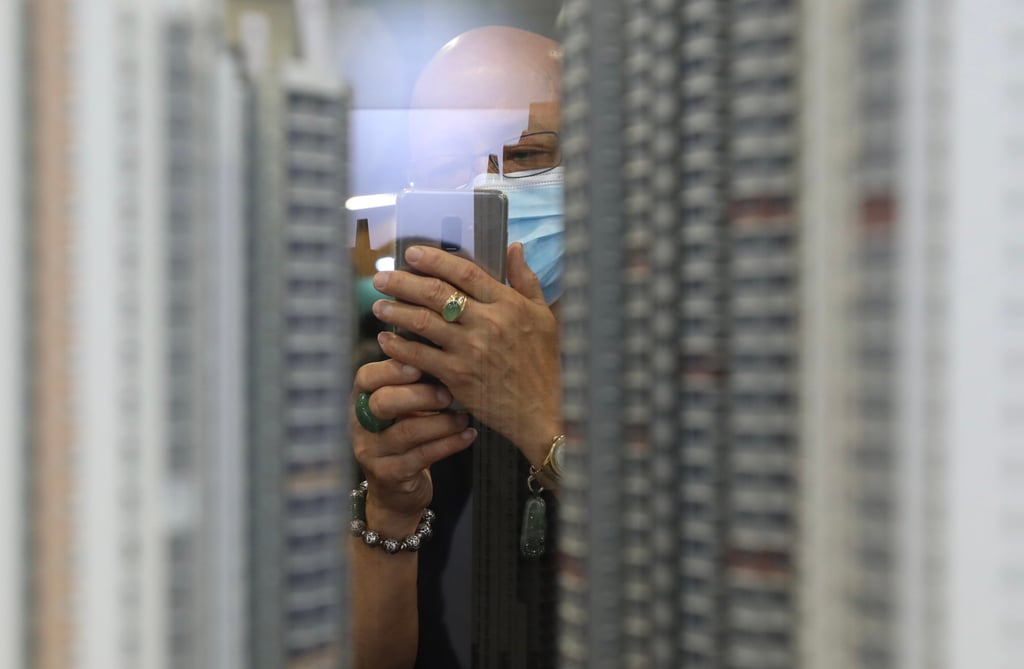
More restrictions will be placed on potential buyers under the Home Ownership Scheme (HOS) – a government programme allowing people to buy public housing at a discounted price – to make sure they are not turning their properties into quick profits.
“The policy is in line with my long-held belief that housing is not a commodity and should not be used for speculative investments,” Lam said, echoing a similar line delivered by Chinese President Xi Jinping during a 2017 speech.
In line with a policy address pledge to streamline building processes, Lam said the Development Bureau would table a proposal to the Legislative Council in the first quarter next year to amend five laws – the Town Planning Ordinance, Lands Resumption Ordinance, Foreshore and Seabed (Reclamations) Ordinance, Environmental Impact Assessment Ordinance, and Roads (Works, Use and Compensation) Ordinance.
She also previewed a bureau announcement that the government would regulate the size of private flats by imposing a minimum area, an issue which has been causing social outcry with developers’ growing tendency to build “nano” homes.