AI no match for innovative human minds, says mathematician winner of Hong Kong’s Shaw Prize
- Renowned mathematician Shing-Tung Yau says human ingenuity will still be catalyst for major advances, as AI struggles to innovate and create new ideas or concepts
- Tsinghua University professor picked up this year’s Shaw Prize in the mathematical sciences category for his life’s work

Artificial intelligence (AI) will not replace humans as major innovations always come from the power of our minds, according to world-renowned mathematician Shing-Tung Yau, a winner of Hong Kong’s Shaw Prize this year.
The Tsinghua University professor picked up the prize in the mathematical sciences category for his life’s work, including the “Calabi-Yau manifolds”, which provided evidence to show that six “extra dimensions” might exist and was credited for its key role in the development of complex geometry.
In an interview with the Post on Saturday last week, a day before he was presented the prize in Hong Kong, Chinese-American Yau addressed concerns over the rapid advances in AI, saying he was confident the underlying strengths of the technology were not “fundamental enough” to solve the types of complex problems that required human ingenuity.
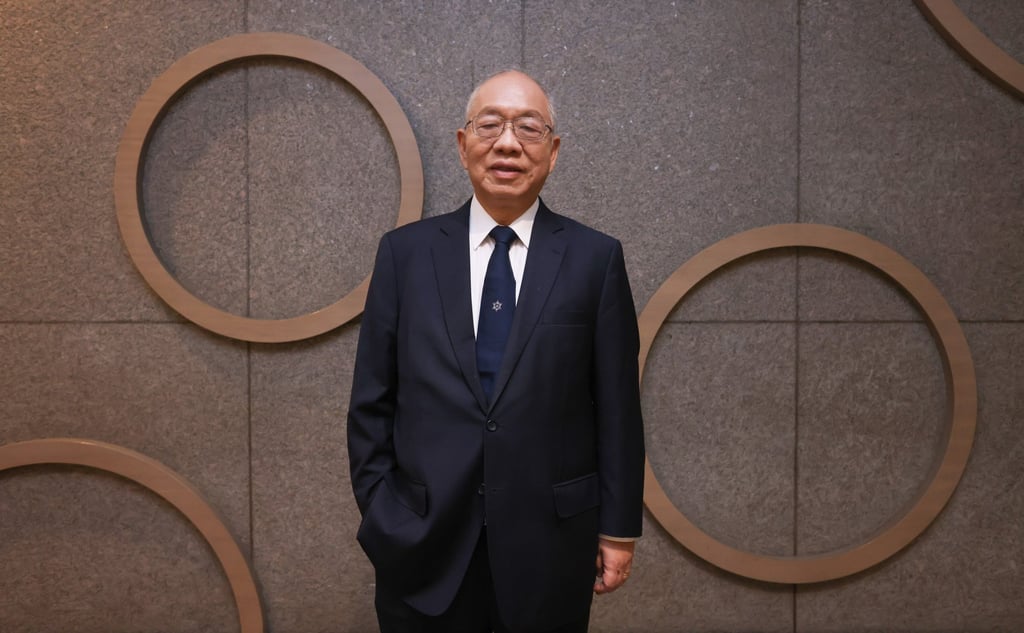
“[This is] because AI is all based on the data and all the concepts that have been created before,” said Yau, who was raised in Hong Kong and born in neighbouring Guangdong province in mainland China.
“To create a brand new concept, which has never existed before, I strongly doubt that AI would be able to do it.”
Yau, with 57 years of mathematics research under his belt since his student days at the Chinese University of Hong Kong in 1966, said the “most interesting” part of his work was having the chance to create through research, which still gave him a thrill.
He added AI was designed to prevent human error. “Human beings make discoveries based on mistakes ... and that, I think, AI would not be able to do.”