Explainer: how Hong Kong has for decades been a magnet for refugees and migrants
The city has long attracted those fleeing persecution as well as many in search of a better life

Hong Kong has a rich history of immigration and has long been a destination for refugees. This is deeply woven into the city’s multicultural heritage. The economic miracle of the 1960s and 70s was largely built on the back of cheap refugee labour that powered a manufacturing boom.
But refugees have also made local news in more recent times. In 2013, US National Security Agency whistle-blower Edward Snowden found shelter in the homes of asylum seekers from Sri Lanka and the Philippines for two weeks as American authorities launched a worldwide manhunt for the fugitive behind one of the biggest data leaks in history.
The first wave of mass immigration to Hong Kong in the modern era saw the population explode from 600,000 to 2.1 million between 1945 and 1951, as mainland Chinese rushed to flee the horrors of the country’s civil war and communist revolution that followed.
As many as 100,000 came to the city each month after the Communist Party took power in 1949. Many secretly swam the perilous 4km stretch of water from Shenzhen, risking death by drowning or being shot by People’s Liberation Army guards.
Hong Kong’s population count continued to rise exponentially in the years that followed, reaching 3.1 million by 1960 and just under 4 million by 1970. Today, the city’s population density is one of the highest in the world.
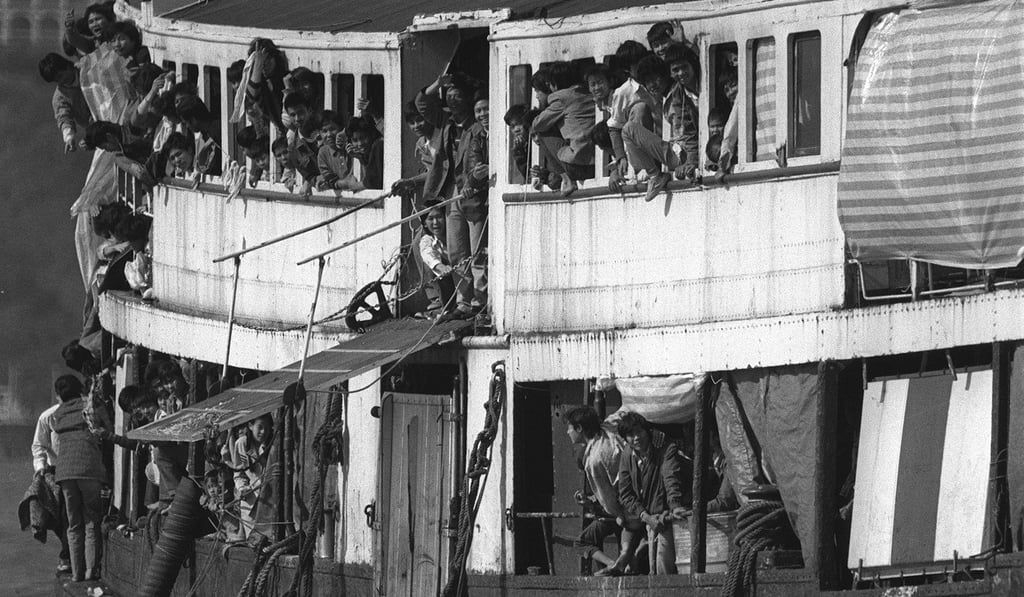
The Vietnam war brought more than 200,000 refugees by boat in the mid-1970s. They languished in appalling conditions in purpose-built detention centres. Only about 1,400 were allowed to stay in the city permanently. By 2000 some 143,700 had been forcibly resettled to other countries and 67,000 sent back to Vietnam.