Teaching Chinese culture in a modern context: how an international school gives its students an immersive experience
Hesitation about China related matters among local pupils doesn’t seem to affect the pupils at the Canadian International School of Hong Kong, according to the school’s director of Chinese Studies

After walking between the indigenous Canadian totem poles at the entrance, we are surprised to find a whole floor of Chinese classrooms tucked away in the ski lodge-like architecture of the Canadian International School of Hong Kong.
As we enter the Chinese Culture Centre located on the 11th floor right above the main library, we find ourselves looking down a corridor lined with Chinese lattice windows and supported with bright red pillars. The whole floor is marked off for the After School Chinese Culture Academy (ASCCA), where pupils can enjoy an immersive experience in a range of cultural extracurricular activities. The centre is made up of a Chinese library, a large multifunctional open area for performances and four classrooms named after Chinese dynasties.
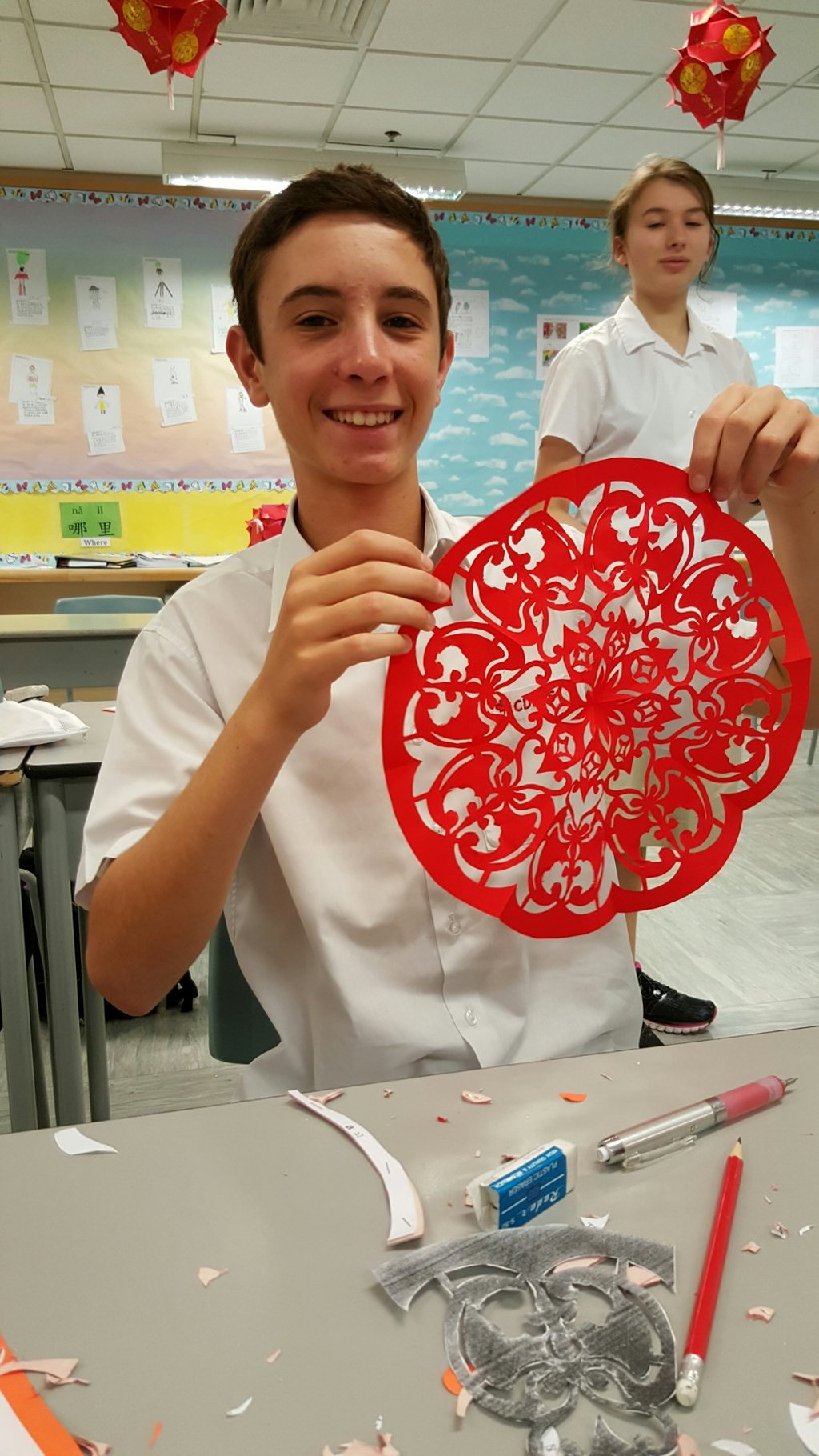
The centre opened in the summer of 2015, but its concept took shape eight years ago, when the director of Chinese Studies, Penny Pan, came to the Canadian school.
“The centre was built to complement what the school may not have in the mainstream curriculum,” she says. Even though teachers try to cram as many cultural elements as possible into the mandatory Chinese language lessons, which amount to at most 15 per cent of the total instruction time – they’re barely scratching the surface.
History isn’t taught systematically in the curriculum either. “When teachers talk about the world wars in history lessons, they will touch on the Opium War and the Sino-Japanese War, but it’s never in-depth,” Pan says.
“Which is why we started the ASCCA. We want to make the whole learning [experience] more in-depth, instead of a wishy-washy kind of experience.”