New history textbooks for Hong Kong students ‘compress details of Tiananmen Square crackdown, with no mention of commemorative vigil’
- New textbooks are still being vetted by education authorities, as part of review aimed at enhancing pupils’ understanding of Chinese history
- Crackdown now listed under a section titled ‘Difficulties encountered during the reform’, with some textbooks providing only a few photos or brief mention of death toll

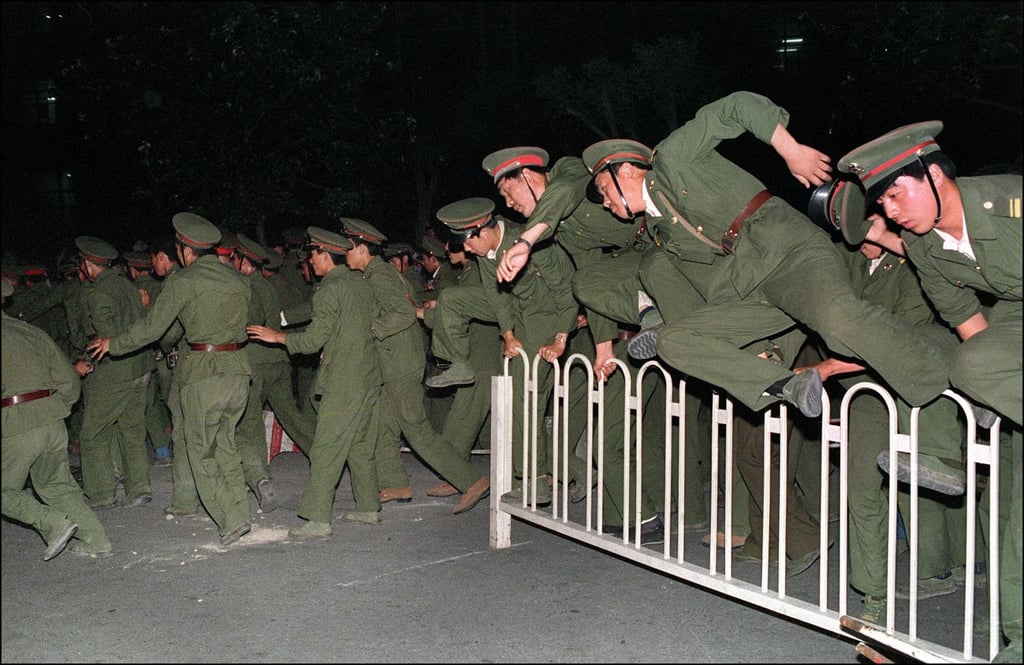
New Chinese history textbooks designed for a revised syllabus for junior secondary students in Hong Kong only briefly discuss the Tiananmen Square crackdown in 1989, with no mention of a commemorative vigil held in the city, the Post has learned.
Educators said some of the textbooks had compressed details of the event into a page or paragraph, as the revised syllabus was broader, while others were of the view that publishers should avoid taking a stance on the crackdown given much of the related information remained undisclosed.
The Post has obtained several newly published Chinese history textbooks which are still being vetted by the education authorities before they can be used by Form Three students in September.
The Education Bureau decided to review the subject’s syllabus in 2013 after it had been in use for two decades.
The review was aimed at enhancing pupils’ understanding of Chinese history and the nation’s development, and strengthening their sense of belonging to the country. But the guideline is a framework and does not mention which events should be put in the textbooks.
All publishers of the textbooks seen by the Post put the crackdown under a section titled “Difficulties encountered during the reform” in the chapter “Policies of the Chinese Economic Reform”.
One textbook, published by Aristo Educational Press Ltd, depicted the crackdown in only one paragraph without any photos or mention of the death toll.
“In April 1989, former Communist Party General Secretary Hu Yaobang died. Students and residents in Beijing held memorial activities, which were later turned into a campaign to fight corruption and call for democratic reform. On June 4, the People’s Liberation Army dispersed the crowd at Tiananmen Square by force. This incident was called the ‘June 4 incident’. Some countries suspended economic exchanges with China, and the reform and opening up of the country also stagnated,” it read.