Paper jam in Hong Kong as mainland China tightens requirements on waste imports
Fully-loaded barges of paper waste have been sitting idle in Hong Kong’s berths since Friday – with 4,000 tonnes alone at Gin Drinkers Bay in Tsuen Wan

Waste paper could pile up in the streets and landfills of Hong Kong and the elderly who depend on collecting scrap could be left without valuable income if the city’s recycling firms follow through on a threat of industrial action next week.
Jacky Lau Yiu-shing, director of the Recycle Materials and Re-production Business General Association – which represents the city’s major recycling firms – said the trade had decided to stop collecting waste paper from next Monday to ride out an import-export crisis.
In an rare move, China stopped issuing for approval notices allowing mainland Chinese workshops to import waste, for the current quarter of the year. Since Friday, fully-loaded barges of paper waste have been sitting idle in the city’s berths – 4,000 tonnes alone at Gin Drinkers Bay in Tsuen Wan.
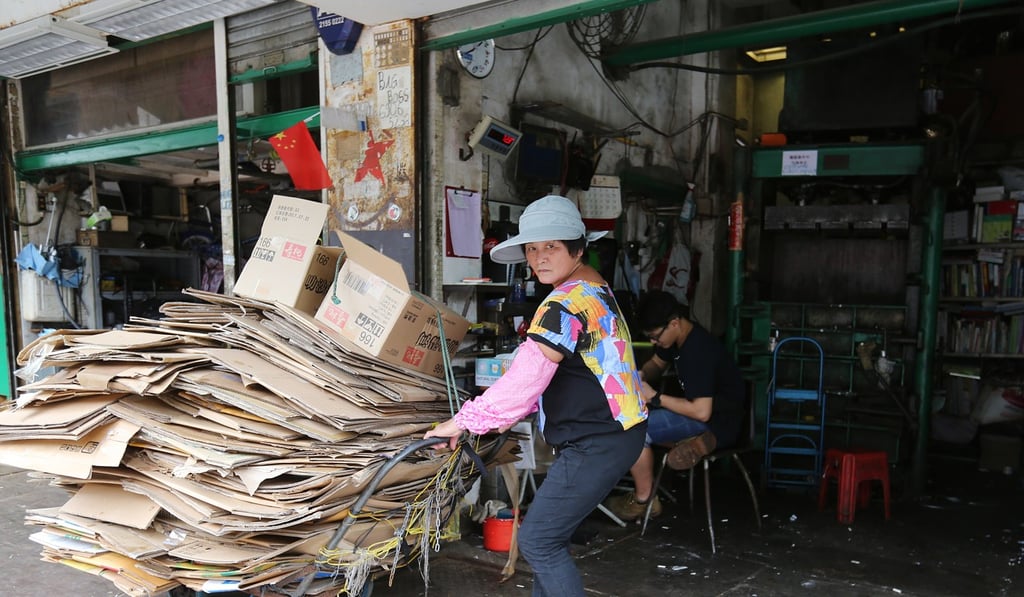
Lau said traders would have to wait for quotas on approval notices to be freed up when shipments coming in from Europe and the US reach mainland China – in about 40 to 50 days. If the pressure is not eased, about half of the 80,000 tonnes could be absorbed by Southeast Asian markets, but would entail higher logistics costs that many exporters would find hard to shoulder.