The HK$33.5 million research that will help save lives in landslide-risk areas in Belt and Road countries
Project led by local professor seeks sustainable solutions for rapid debris flow as extreme weather events become common

Multiple flexible barriers are inexpensive, lightweight, cost-effective and easy-to-build and can be installed between mountain passes and gorges.
The system is designed to prevent rapid debris flow and rockfall from accelerating as they tumble downhill. It absorbs and dissipating energy in each catchment.
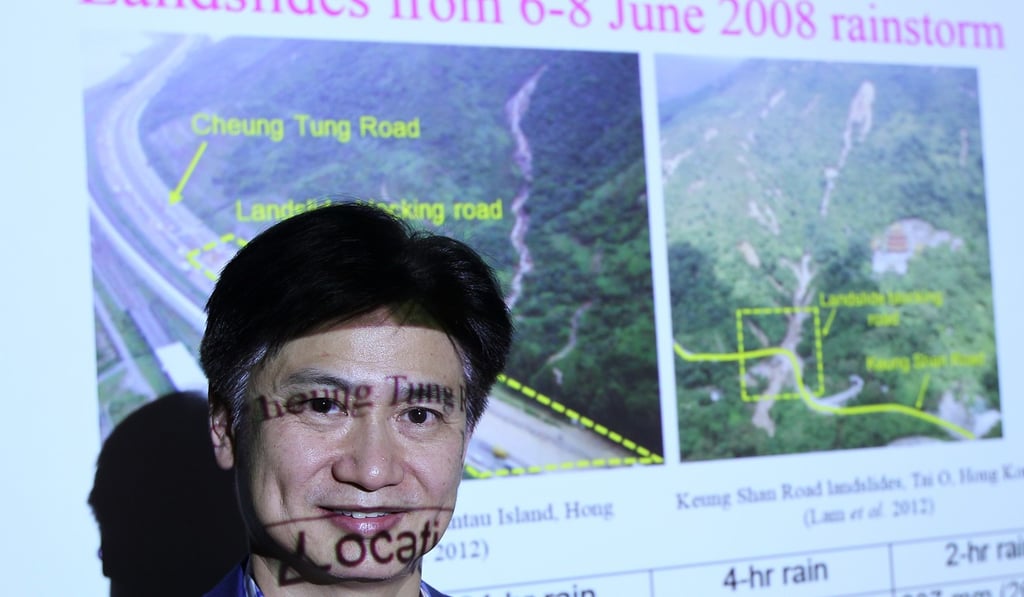
According to Professor Cui Peng of the Chinese Academy of Sciences’ Institute of Mountain Hazards and Environment, a researcher on the team, most of the “Silk Road economic belt” will pass through areas prone to geological hazards. The percentage of GDP lost to natural disasters in these countries is double that of the world average.
Hong Kong’s hilly terrain, sub-tropical climate and built-up urban centres have given local engineers considerable expertise in managing slopes and mitigating landslides over the last four decades.