Why the microbes in your poo could one day help people to lose weight
Chinese University launches region’s first research and transplant centre using faecal matter to cure intestinal problems

A Hong Kong university has launched Asia’s first research and transplant centre to use gut microbes from the faeces of healthy people to cure others of intestinal problems, and is now studying whether the method can be applied to managing diabetes and obesity.
Professor Ng Siew-chien, from Chinese University’s department of medicine and therapeutics, said previous studies had revealed the diversity and differences in intestinal bacteria of obese people and those of a healthy weight.
For example, the former may have microorganisms that trigger a desire to eat more or digest and absorb food faster than others.
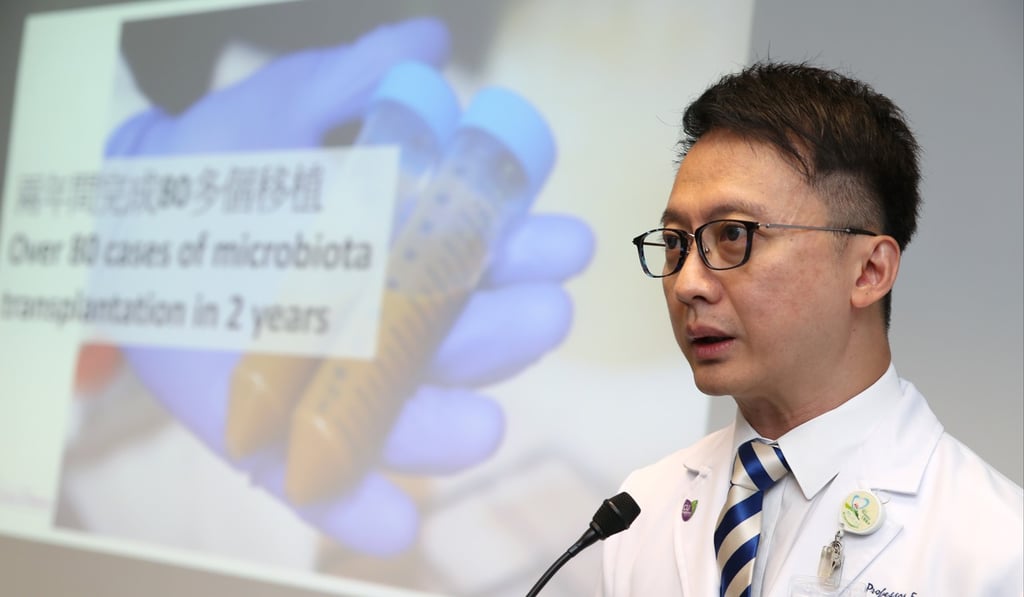
“If we could use [microbiota transplantation] to modify the bacteria of obese patients, there are a few benefits,” Ng said. “First, it is not a drug. Patients do not like to take drugs because of the potential side effects. So, I find that people generally find this [treatment involving bacteria] more acceptable.
“Second, if we can change the microbiota long-term, there is a chance to change the lifestyle and diet and thus potentially reduce the chances of related cardiovascular diseases.”
A government survey released last year said half of Hong Kong’s population aged 15 or above were considered overweight or obese, while 8.4 per cent suffered from diabetes.