Breakthrough drug co-developed by Hong Kong research team offers hope of longer life to brain cancer sufferers
- Researchers at Hong Kong University of Science and Technology say the drug, PLB-1001, can stall the effects of rare disease Secondary Glioblastoma
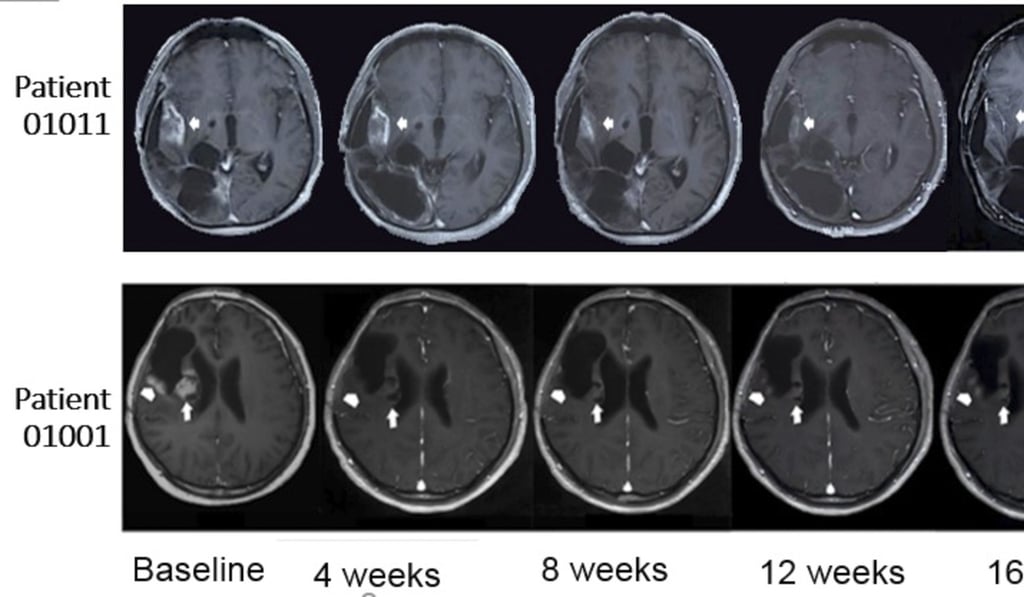
- The drug showed signs of success in a three-month trial on patients whose cancer was resistant to chemotherapy

Patients diagnosed with a deadly brain cancer may soon see new hope of living longer following a breakthrough by researchers from a university in Hong Kong, the school announced on Monday.
Around 200 Hongkongers are afflicted by brain cancers every year; among them, about 20 are diagnosed with a rare but aggressive type called Secondary Glioblastoma, known as sGMB.
Current treatments for sGMB, including chemotherapy and orally administered drugs, have proven to be ineffective, with a mortality rate of almost 100 per cent.
Now, in a world first, scientists from the Hong Kong University of Science and Technology (HKUST) have announced a discovery that a type of gene mutation is the major culprit behind the cancer’s aggressive progression.
“Previously, anyone who had the cancer would die,” said researcher and assistant professor, Wang Jiguang. “But this gives us a ray of hope that the tumour cells can be tamed.”
Since 2016, the team has been working together with Beijing Tiantan Hospital on sGBM patients.
They identified a gene alteration, known as the METex14 mutations, among 14 per cent of about 80 patients. Due to the mutation, a protein gene in the brain experiences an increase in activity, which activates the sGBM cells, leading to the brain tumour’s growth.