Communication woes between ethnic minority patients and Hong Kong doctors spark call for better health care training
- Experts say such population groups are more susceptible to health care problems and usually fall short of addressing issues with providers

Yousaf Akbar, 40, came to Hong Kong from Pakistan in the late 1980s, but since last year, he has been spending time between the bed and a wheelchair at home.
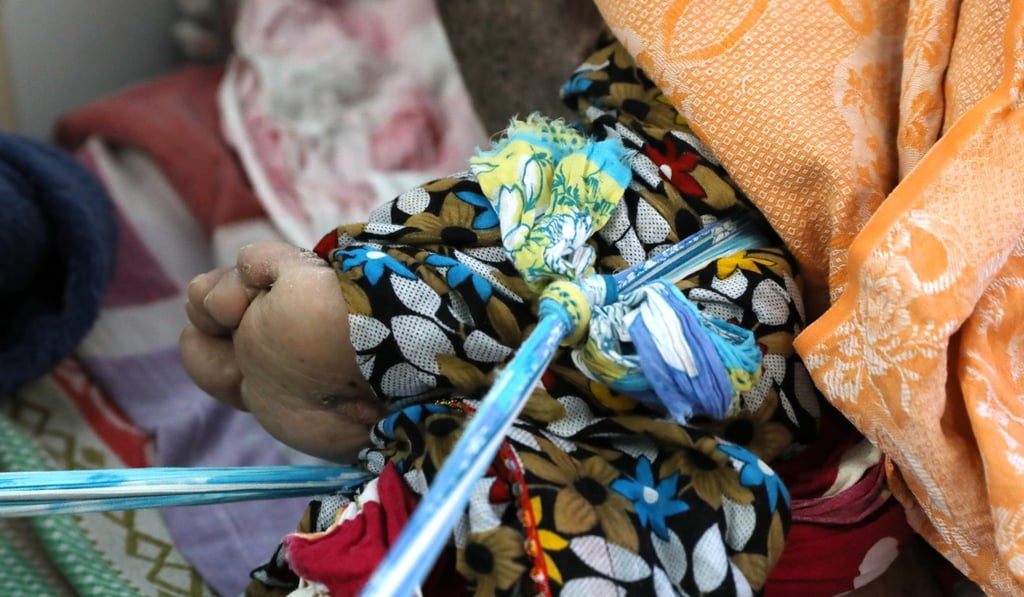
He relies on strips of cloth to shackle his legs to the bed, as he was diagnosed with infective spondylodiscitis, or infection in the spine and adjacent bone structure, as well as spinal cord compression. This has caused his legs to contract and bend. They are tied to the bed to lessen the impact of the condition.
Akbar depends heavily on the care by his wife and elderly mother, who both live with him in a public rental flat in Shau Kei Wan. “I find it really difficult to bear ... My legs will bend towards my chest if they are not tied, and I will not be able to breathe properly.”
Akbar’s family said doctors at Pamela Youde Nethersole Eastern Hospital had not properly briefed them on treatment options, instead only telling him surgery – which was a viable option but had to be performed early – was risky. As a result, he rejected an operation twice and only relied on antibiotics and an external brace.
It was only in July this year that he was told by a private orthopaedist that it was too late to receive surgery.