What Hong Kong can learn from an old Berlin airport on bottom-up city planning
- Tempelhof Field is a green haven of public space that was spared development after authorities listened to voice of the people
- Experts point out the smartest method in smart city planning may not always be about technology

Tempelhof Field in south-central Berlin is the first stop Jonas Schorr shows to visitors, as an example of how bottom-up city planning ties into the development of a smart city.
“Sometimes, the smartest solutions have nothing to do with technology,” says the Berlin native and freelance smart city consultant who helps city managers navigate this novel and sometimes arbitrary field.
The sprawling Tempelhof Airport, which has a history dating back to the Nazi era, is indeed an urban planning and public space wonder of sorts.
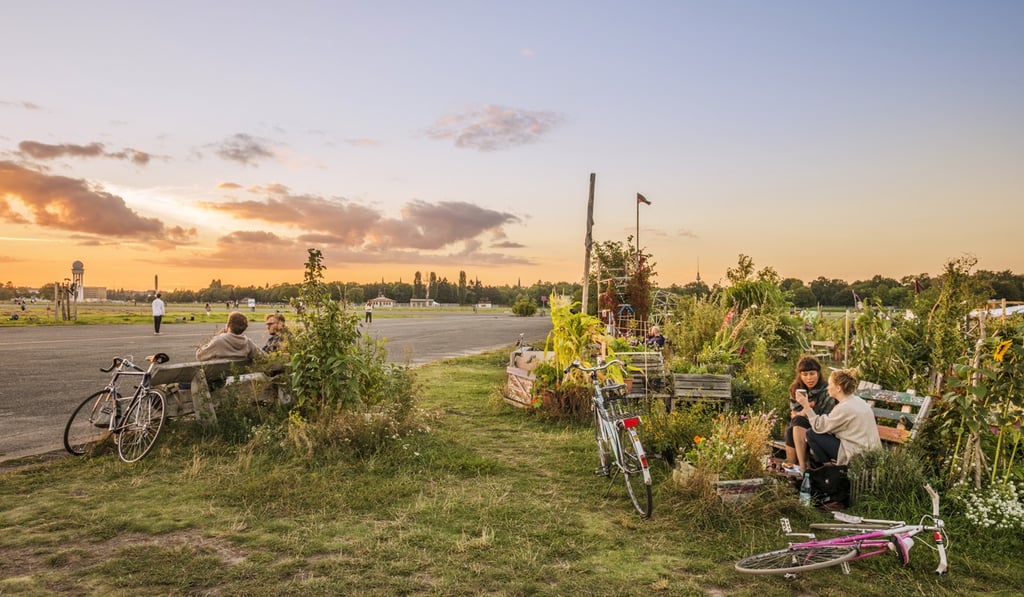
In the summer, families armed with deckchairs and sunshades hold picnics by old taxiways and grassy lawns spread out across 386 hectares of open public space. Barbecues, music festivals, dog walks, concerts and cycling are among the popular activities. A large swathe was requisitioned by the government in 2015 to house refugees.
The site has been eyed for redevelopment since the airport ceased operations just over a decade ago.
American cosmetics giant Estee Lauder proposed turning it into a high-end beauty centre. Another idea was for a 1,000-metre artificial mountain with landscaped, snow-covered ski slopes. Neither plan took off.