Coronavirus: Hongkongers caring for special needs individuals at ‘breaking point’ as vital services are scaled back
- Survey shows respondents, many in lower-income brackets, dealing with lack of sleep, shortened tempers and depression as pressure mounts at home
- Lawmaker calls on government to green light allowance for those caring for relatives at home along with new funds for treatment and training services

Nine out of 10 Hongkongers caring for family members with special needs have felt increasingly helpless amid the coronavirus epidemic, a new survey calling for government financial support shows.
The city’s attempts to contain the highly infectious disease has led to the closure of its kindergartens, primary and secondary schools until April 20 at the earliest, while the Social Welfare Department and some NGOs have cut back their services to reduce infection risks.
That has resulted in mounting pressure on the residents who desperately rely on those services.
The survey, initiated by Labour Party lawmaker Fernando Cheung Chiu-hung and released at a press conference on Saturday, polled 1,400 respondents between February 27 and March 4, with 90 per cent of those surveyed women and 72 per cent acting as full-time carers.
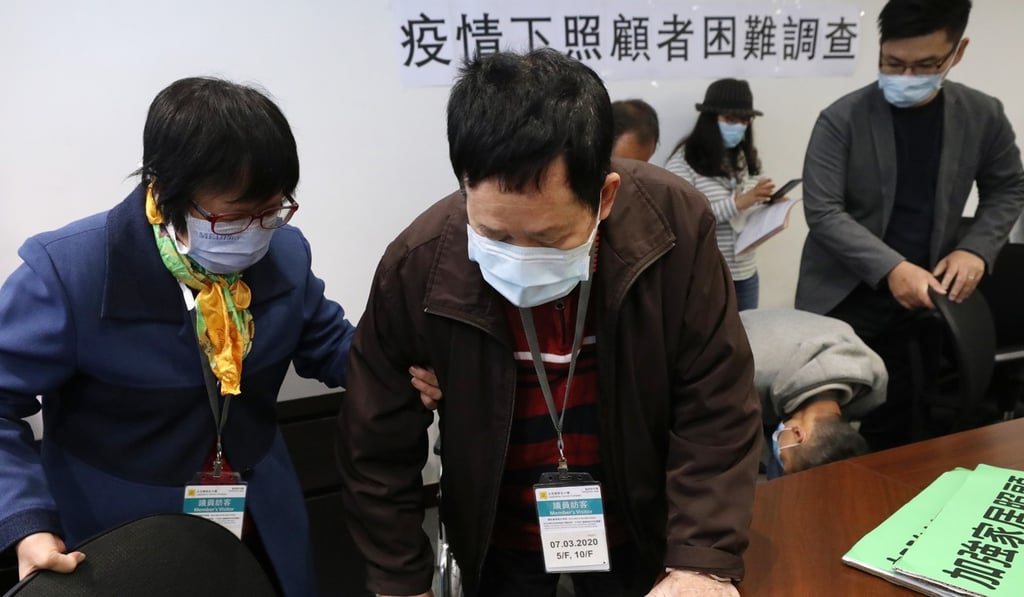
“The situation of carers is dire,” Cheung said. “As schools have closed and services have been cut back, the responsibility of taking care of those with special needs has shifted to carers, who have reached the breaking point.