Coronavirus: ‘live-in’ rule carries real risk for domestic workers sharing flats with quarantined employers, workers group says
- ‘How can we protect ourselves ... when our employers are under home quarantine for 14 days?’ one domestic worker asked
- Federation also says many domestic workers fear dismissal as employers struggle financially during epidemic

Chief Executive Carrie Lam Cheng Yuet-ngor on Tuesday announced new travel restrictions requiring all arrivals from overseas to undergo a mandatory 14-day home quarantine and be subject to another two weeks of medical surveillance.
The announcement and a spike in confirmed cases overseas have led to a rise in the number of arrivals over the past few days, including domestic helpers and their employers.
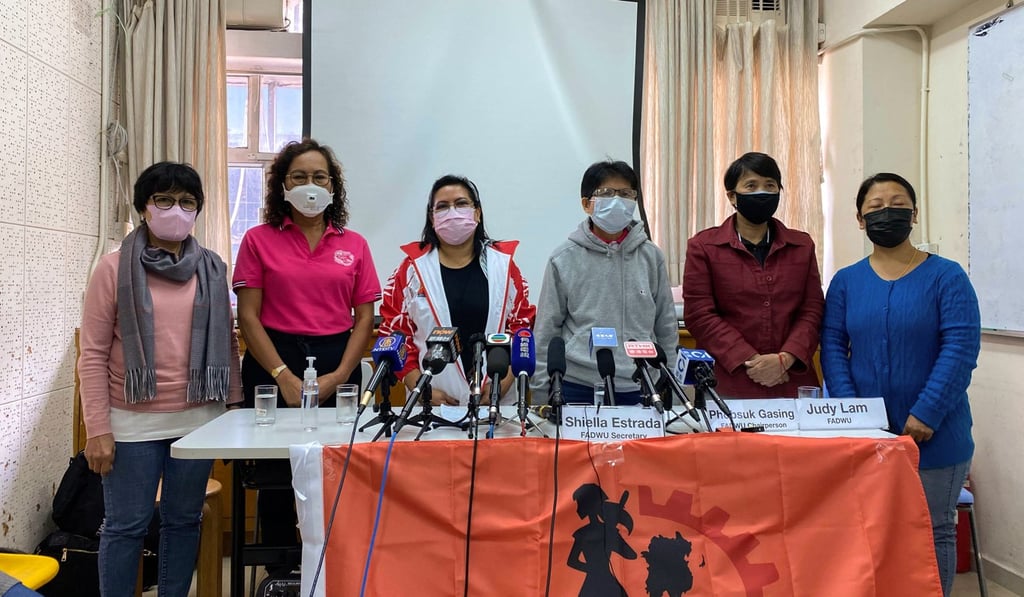
But the Hong Kong Federation of Asian Domestic Workers Unions (FADWU), which represents both local and foreign domestic helpers, slammed the government on Sunday over its lack of clear quarantine guidelines for both returning household staff and their employers.
FADWU secretary Shiella Estrada said while the measures ostensibly target their employers, the city’s nearly 400,000 domestic helpers – most from the Philippines and Indonesia – are bearing the consequences.