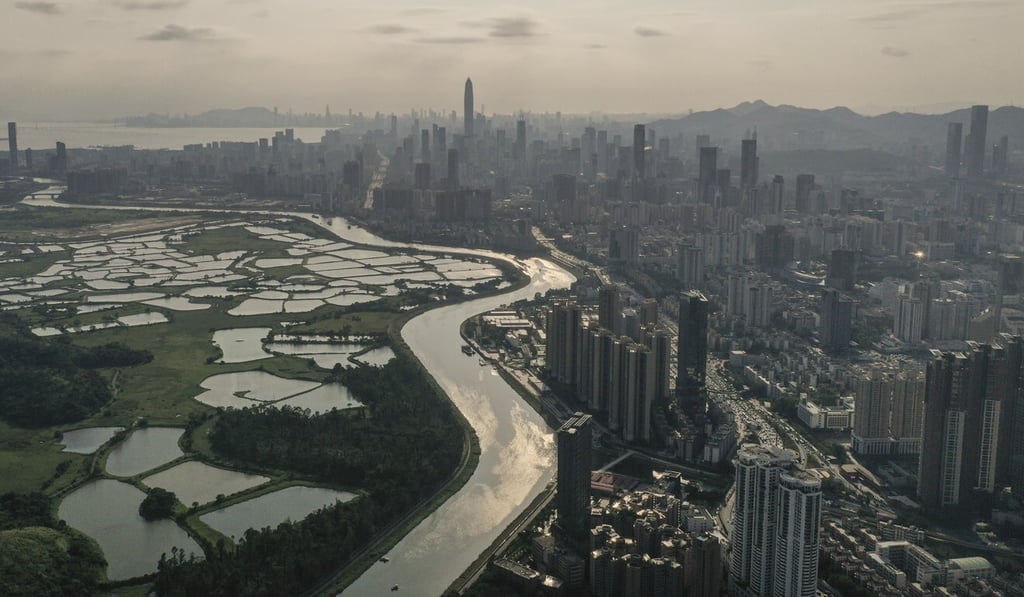
Hong Kong researchers to study ozone formation, PM2.5 in Greater Bay Area to check air pollution
- Environmental Protection Department is embarking on a three-year project to assess the causes of ozone formation in Greater Bay Area
- Professor Steve Yim from Chinese University plans to track particulate matters that affect people with lung and heart problems in Pearl River Delta

Hong Kong’s researchers are planning to study two of the most persistent cross-boundary air pollutants in the Greater Bay Area.
The Environmental Protection Department is embarking on a three-year project to study ozone pollution in the Greater Bay Area, while an academic at Chinese University is tracking PM2.5 particulates that affect people with lung and heart problems.
Medical experts blame air pollution for causing up to 1,000 premature deaths every year in Hong Kong among vulnerable groups, such as the elderly. Increased tracking of pollutants will allow policymakers to identify ways to reduce air pollution to safe levels suggested by the World Health Organisation.
Although several policies in recent years have succeeded in cutting down on most air pollutants in Hong Kong, ozone levels have nearly doubled over the past two decades.
The air-quality guidelines of WHO set the daily maximum eight-hour mean for ozone at 100 microgrammes per cubic metre, but Hong Kong’s own air-quality objectives, which set the concentration limits for pollutants and the number of times the levels can be exceeded in a year, uses WHO’s interim limit of 160 microgrammes per cubic metre, with nine exceedances allowed.