Coronavirus: researchers from Hong Kong, Macau, mainland China hope to start clinical trials of vaccine in months
- The team has developed a vaccine that stops a key part of the infection process by preventing the coronavirus from attaching to human cells
- Johnson Lau of PolyU says residents of Hong Kong and Macau should be given priority when the vaccine hits market after successful trials

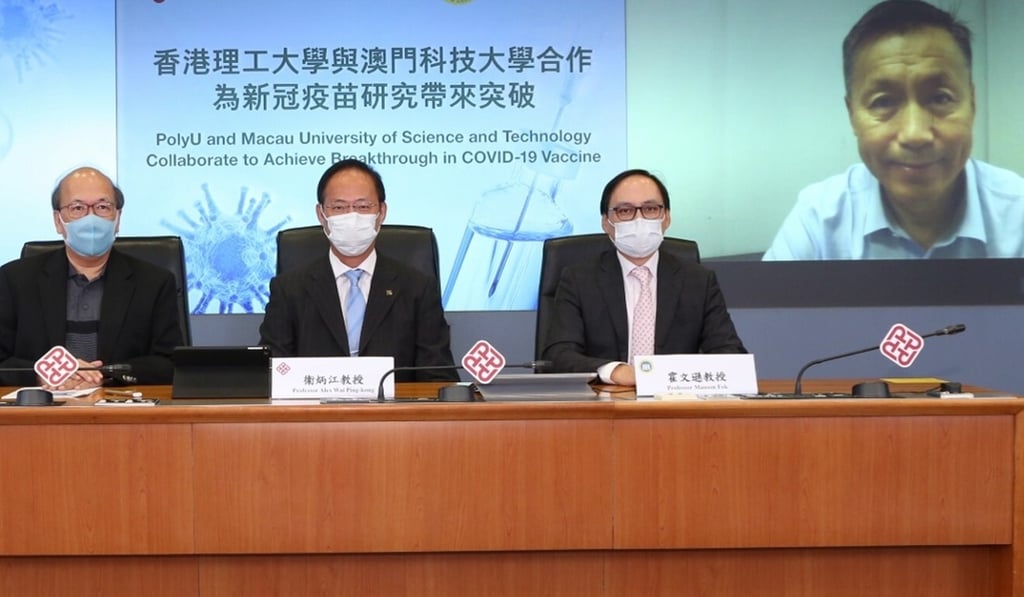
Researchers from Hong Kong, Macau and mainland China have developed a vaccine for the coronavirus and hope to start clinical trials within months. They aim to reserve 8 million doses for residents of the two cities once the vaccine is ready.
The team has developed a vaccine that stops a key part of the infection process by preventing the coronavirus from attaching itself to human cells, and has managed to induce a strong immune response in as early as seven days in mice, rabbits, and monkeys injected with the vaccine. Their findings were published in the science journal Nature last Wednesday.
“The coronavirus uses its spike protein receptor binding domain [S-RBD] to attach to receptors in human lung cells,” said one of the lead researchers, Professor Zhang Kang from Macau University of Science and Technology’s Faculty of Medicine.
“This is the most important step in the infection process, so we knew that if we could stop that from happening, we would be able to block the virus from invading the body.”
The finding was particularly significant as samples taken from all of the animals tested, including the monkeys, which are closely related to humans, were able to prevent the binding process and neutralised infection by a lab-made SARS-CoV-2 “pseudovirus”.