Hong Kong study finds hungry fish creating microplastics at faster rate than previously thought
- City University associate professor Dr Cheung Siu-gin makes discovery while collecting fragments for other research
- WWF-Hong Kong researcher says results show just how big the plastics problem is

Sea animals could be chewing on ocean plastic waste and creating microplastics at a faster rate than previously thought, a Hong Kong researcher has found.
Dr Cheung Siu-gin, an associate professor at City University, made the discovery as he was collecting the tiny plastic fragments for other research, and noticed about 10 per cent of the microplastic gathered from Hong Kong’s mudflats and beaches were neat triangles.
“Some were shaped like sandwiches. I didn’t think it was possible they could have disintegrated naturally,” Cheung said. “So it seems likely that fish or other sea animals are eating plastic waste.”
His finding could mean larger ocean plastics are being broken down into microplastic faster than previously thought. The study, which has been published in the scientific journal Marine Pollution Bulletin, is one of the first in the world to categorise such microplastics.
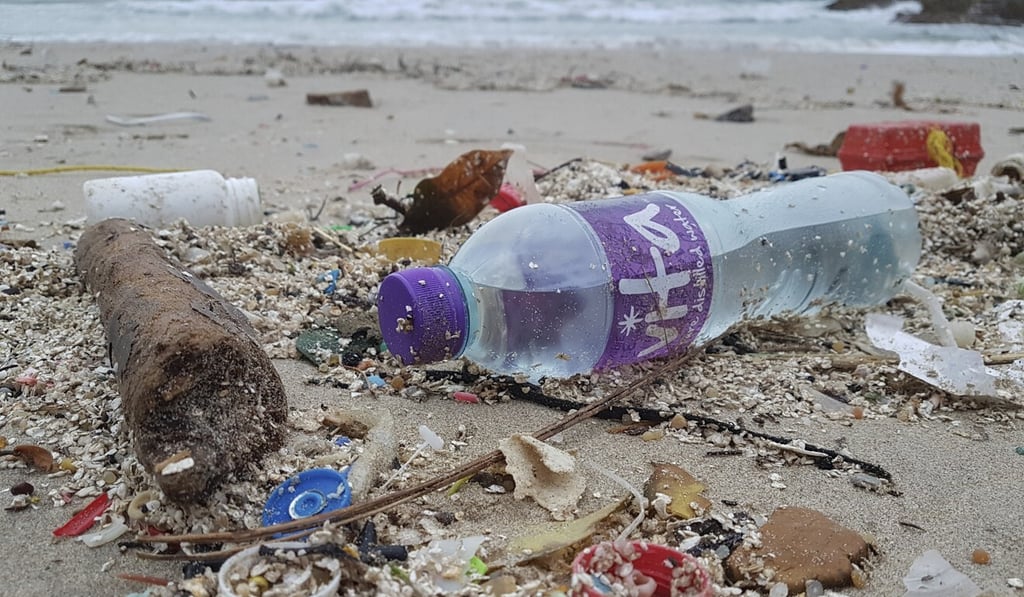
Microplastics are usually formed when larger pieces of plastic waste in the ocean are broken up over time by the waves or heat from the sun, resulting in irregularly shaped fragments, while man-made microplastics used in personal care products were usually small beads, Cheung said.