Workers crammed into windowless containers at Hong Kong’s busiest port sleep in dorms that are ‘hotbeds’ for Covid-19 during third wave
- With as many as 20 employees sharing the cramped quarters for rest breaks during long shifts, social distancing is exceedingly difficult
- Operators have expanded the facilities, but unionists and health experts warn current cluster of 65 cases could grow beyond control

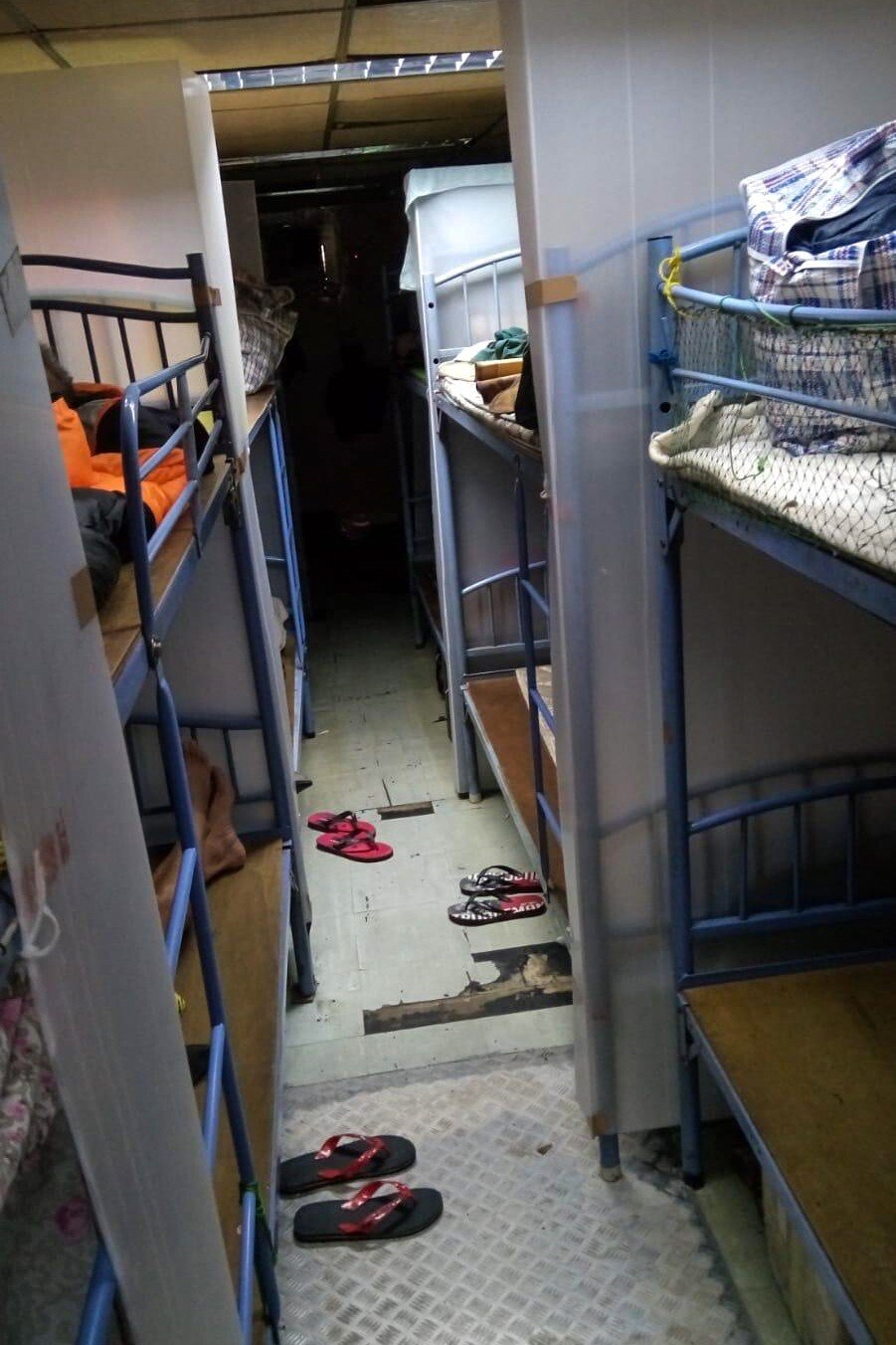
With cargo ships unloading around the clock, workers at Hong Kong’s busiest port are forced to grab what little sleep they can during long shifts in makeshift dormitories crafted from containers.
The conditions inside the windowless rooms are cramped, with as many as 20 workers sharing the space, making social distancing exceedingly difficult. No one has an assigned area, so they climb into whatever bunk bed happens to be free.
“If you’re not wearing a mask inside and you’re infected, everyone else will be infected,” said Ken Lai Ma-kin, a member of the Union of Hong Kong Dockers who has been in the business for nearly half his 58 years. “The beds are very close to each other.”
About 8,000 people work at the port’s 24 berths spanning 279 hectares (690 acres) on the western edge of the busy Kowloon area, handling 78 per cent of the city’s 18.3 million 20-foot equivalent units last year. Many sleep at the rest facilities because they work long shifts that are physically demanding and extend beyond 24 hours. Contractors provide food, and showers are also available.