Plagued by dwindling harvests and shrinking shellfish, Hong Kong oyster farmers turn to conservation group for answers
- The Nature Conservancy starts gathering data to help oyster farmers figure out host of problems
- Farmers say Deep Bay has become overcrowded since mainlanders began farming oysters too

Hong Kong oyster farmers are struggling to keep their tradition alive in the face of multiple challenges, including labour shortages resulting from Covid-19 travel restrictions.
Now they are counting on a scientific study of Deep Bay, in Lau Fau Shan, to help turn the tide and ensure they can continue selling their sun-dried “golden oysters” and protect the shellfish habitat as well.
“We have permits to hire fishermen from China to help us, as local labour is too expensive. But the pandemic has affected our permits and our movement across the border,” said Chan Shu-fung, 40, a third-generation oyster farmer.
“With fewer workers, the amount of oysters we can shuck also decreases, so it’s inevitable our business will be hit,” he added.
Chan, president of the Deep Bay Oyster Cultivation Association, said there were deeper problems for the community, right across from Shenzhen. These range from pollution to extreme weather and overcrowding of the oyster-farming area.
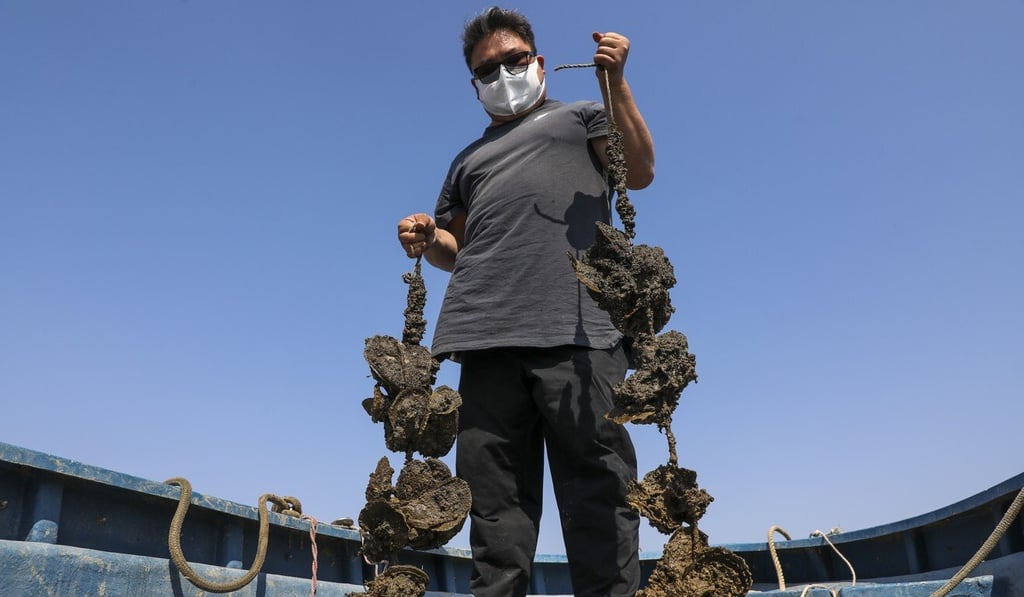
Lau Fau Shan’s dried oysters, once a famed delicacy, were shunned by local consumers after media reports in 2007 of hazardous levels of bacteria and heavy metal in the shellfish there. In 2013, the Shenzhen government even threatened to ban sales of the shellfish as being unfit for consumption.