Children with obstructive sleep apnoea at higher risk of hypertension, Hong Kong researchers find
- Experts at Chinese University complete world’s first decade-long study of how a childhood sleep disorder can lead to a variety of health problems later in life
- Young people with moderate to severe obstructive sleep apnoea are 2.5 times more likely to develop high blood pressure, they find

Researchers at a Hong Kong university have completed the first decade-long study of how childhood sleep disorders can affect blood pressure later in life and found young people with moderate to severe obstructive sleep apnoea (OSA) were 2.5 times more likely to develop hypertension as adults.
The team from Chinese University also warned that the disease, which affected about 5 per cent of school-aged children in the city, could result in higher risk of cardiovascular, metabolic or neurobehavioural complications if left untreated.
“OSA is common in children but often unrecognised,” Professor Albert Li Man-chim, chairman of the university’s department of paediatrics, said on Monday. “Snoring, night sweats and mouth breathing are some common symptoms of OSA. Other symptoms are daytime inattention, hyperactivity, sleepiness and behavioural problems.”
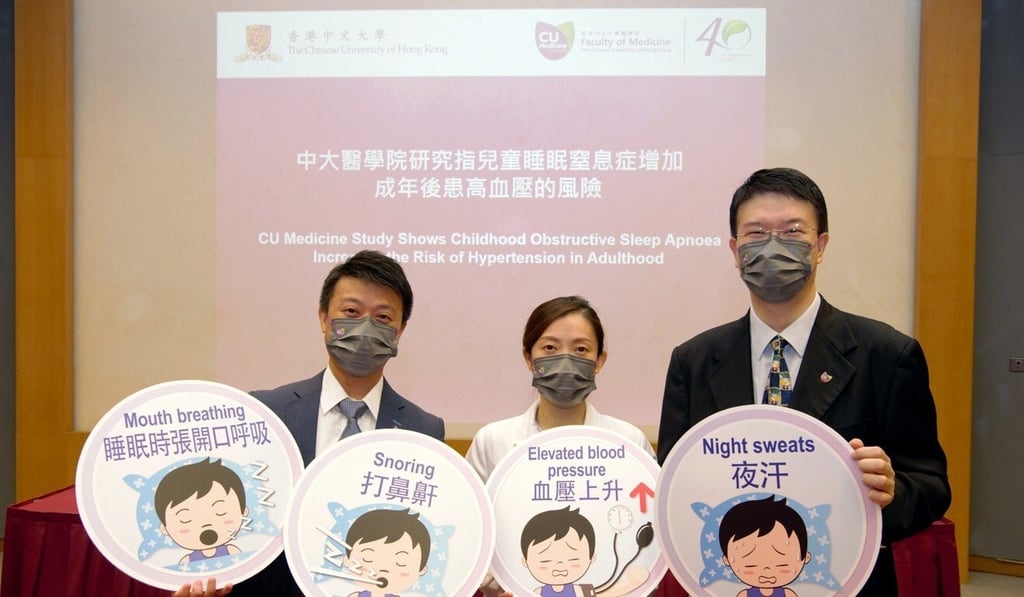
Li warned that parents might not always associate the symptoms with a sleep disorder and urged them to seek medical advice if they noticed them. Paediatricians should also routinely check whether their patients experienced them, he said.
OSA happens when the upper airway becomes blocked during sleep, leading to pauses in breathing or overly shallow breathing, which can occur many times during the course of a night.
The most common causes for the blockage in children is enlarged tonsils and adenoids or obesity. According to Li, the correct treatment is to remove the enlarged areas through surgery or for the patient to lose weight.