Testing children’s stool may show if they are autistic, Hong Kong researchers say
- Chinese University team finds those with condition have five species of bacteria in their guts not found in other children
- Testing kit allows parents to collect sample at home and send it to laboratory for analysis

Researchers at the Chinese University of Hong Kong have developed a method that may determine whether a child is autistic by analysing a stool sample, a discovery they claim allows for faster diagnosis.
The tests were the first of their kind to check for autism spectrum disorder in the early stages of development, the experts said in releasing the findings of a study on Thursday.
They discovered that while autism was often the result of a combination of genetic and environmental factors, young sufferers had five species of bacteria in their guts not found in other children.
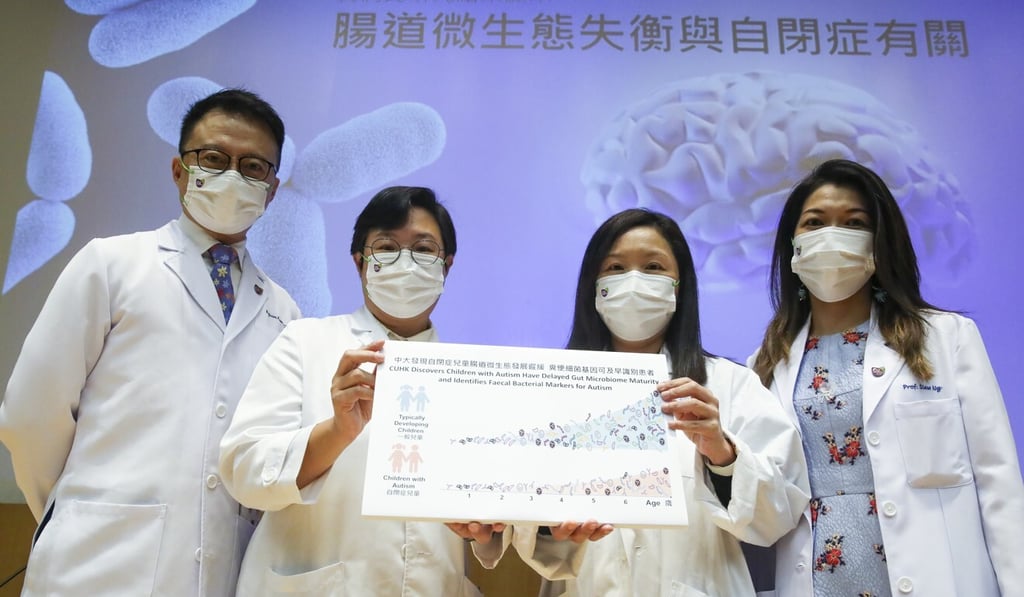
The bacteria could affect the central nervous system and have a profound effect on social behaviour, according to Professor Ng Siew-chien, associate director at the Centre for Gut Microbiota Research.
“The implications are that a few of these bacteria are known to be pathogens, so they secrete neurotoxins. These toxins will … go to the brain and affect some of its functions,” Ng said. “That would affect the mood of the children, their behaviour, their neurodevelopmental state and their social interactions.”
The study also found that children with autism were likely to have delayed gut development compared with their peers. Researchers analysed stool samples from 128 children aged three to six, with half of the group being autistic.