Coronavirus Hong Kong: time to live with the virus? Sweeping fifth wave forces officials to consider the previously unthinkable
- Recent surge of infections has experts agreeing ‘dynamic zero-Covid’ cannot go on indefinitely
- Low take-up of vaccines, particularly among elderly, remains a cause for worry, authorities say

When Hong Kong set a daily record of 164 Covid-19 infections last Thursday, officials were forced to confront the previously unthinkable: had the time finally come to dump the city’s “dynamic zero-Covid” strategy and move towards “living with the virus”?
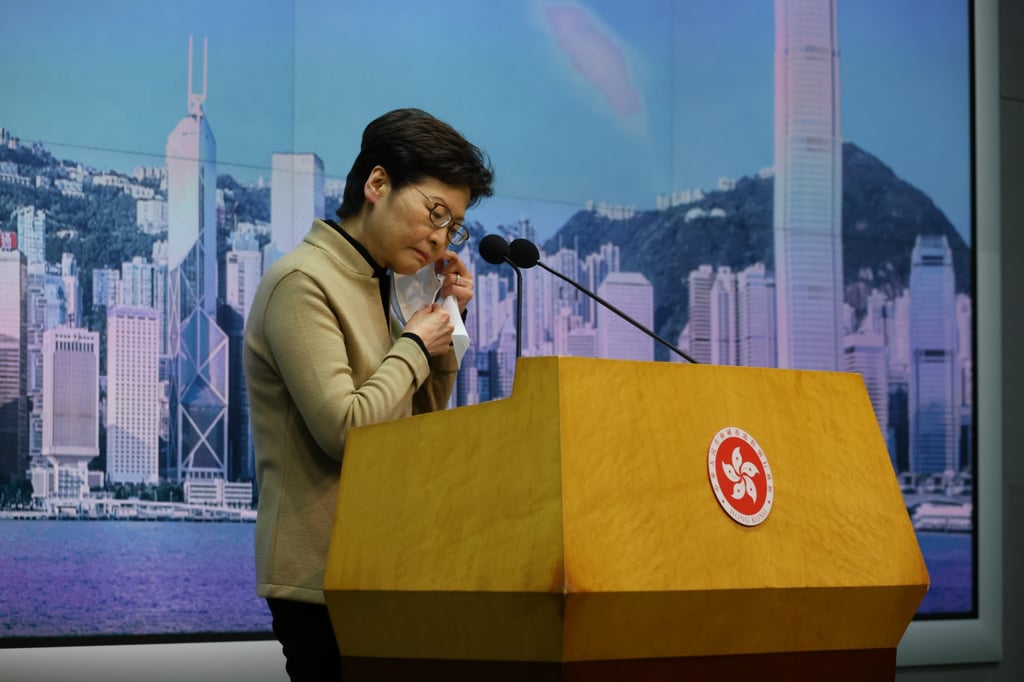
By Thursday evening, even Chief Executive Carrie Lam Cheng Yuet-ngor appeared to be moving in that direction.
An insider told the Post the government was considering going further, to include shopping malls and public transport in the vaccine pass scheme, barring entry to those who are unvaccinated.
For now, however, Lam said Hong Kong did not have the prerequisites for living with the virus, and she meant the city’s vaccination rate was still too low.
As of Sunday, 5.3 million people, or 79 per cent of the population, had received their first vaccine jab, about 4.8 million (or 71 per cent) had their second and only 951,157 (or 12 per cent) had their booster shot.
Among elderly residents, 59 per cent of those aged 70 to 79 had their first jab, 48 per cent had their second, and 8 per cent their third. For those over 80, only 31 per cent had received their first dose, 20 per cent their second, and 1 per cent their third.