10 Hong Kong construction workers test positive for bacterium that causes melioidosis
- Health authorities revealed last week four soil samples from building site at Pak Tin Estate in Sham Shui Po contained bacterium
- Among the 34 cases of melioidosis recorded in city this year, 23 found in Sham Shui Po district, and seven eventually died of disease

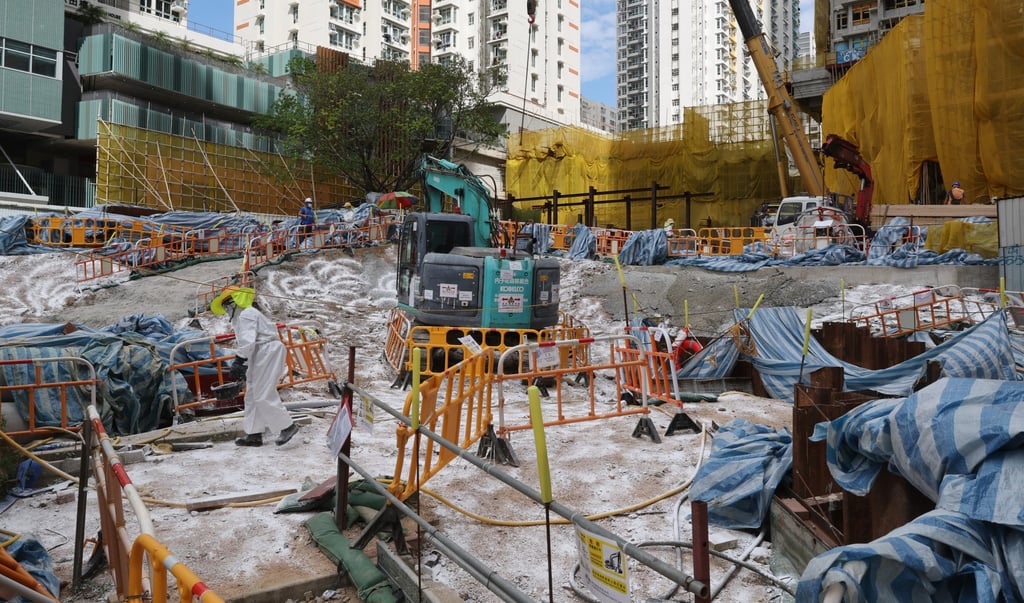
Ten asymptomatic workers from a contaminated construction site in Hong Kong have tested positive for a bacterium that can cause a severe infectious disease known as melioidosis, health authorities revealed on Saturday.
The Centre for Health Protection said the workers, aged 39 to 66, tested positive for antibodies of the bacterium Burkholderia pseudomallei after a serology test.
Melioidosis is usually spread through contact with contaminated soil or water. Symptoms include fever, headache and localised pain or swelling, but in severe cases infections can lead to pneumonia and sepsis, an extreme response to infections where the immune system starts to attack healthy tissue.
Among the 34 cases of melioidosis recorded in the city so far this year, 23 were detected in Sham Shui Po district, and seven eventually died of the disease.
Health authorities earlier this week announced a plan to make melioidosis a statutory notifiable disease, meaning doctors would be required to report cases to officials.
The infected workers would be sent to hospital for treatment, the centre said, adding it was believed they had contracted the disease via contaminated soil or water.
Tests on eight other workers came back negative, while screening of another eight provided inconclusive results and they would be checked again in two weeks, it added.
Last Friday, health authorities revealed that four soil samples from the building site at Pak Tin Estate in Sham Shui Po contained the bacterium, but the centre’s Dr Chuang Shuk-kwan assured the public that none of the cases known at the time had worked, entered or walked near the area.