Covid-19 rules contributed to upsurge in short-sightedness in Hong Kong children, but eye drops may help cut risks, study finds
- Chinese University study finds low-strength atropine eye drops can reduce risk of children developing short-sightedness
- Myopia incidence rate has risen by 2.5 times and speed of eyesight deterioration has doubled since Covid-19 hit, professor says

Ophthalmologists from Chinese University on Monday said they found that a dose of low-concentration atropine eye drops every night could reduce the risk of children developing myopia, or short-sightedness, by 46.4 per cent, with the incidence rate dropping from 53 per cent to 28.4 per cent.
“As our younger generation becomes more reliant on digital devices and we are facing a surge in myopia in the future, our findings suggest low-concentration atropine eye drops is an effective preventive strategy for myopia onset among high-risk children,” said Dr Jason Yam Cheuk-sing, the principal investigator in the two-year study.
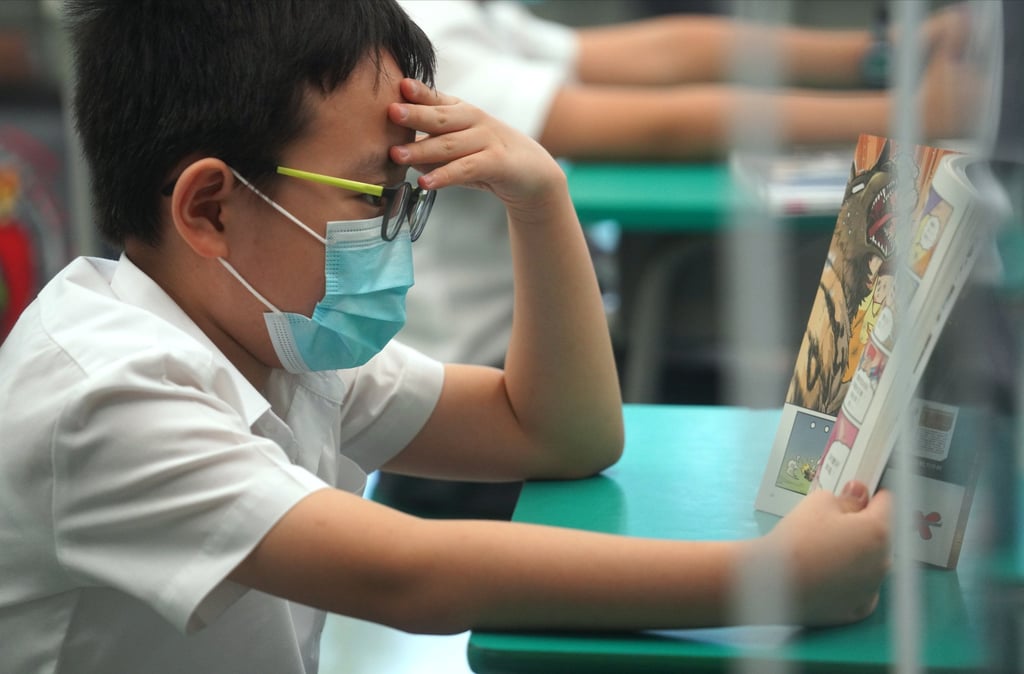
School closures and social-distancing measures during the Covid-19 pandemic have been found to have affected the eyesight of schoolchildren who have had to learn remotely.
Professor Clement Tham Chee-yung, of the university’s ophthalmology department, said that since the pandemic began, the myopia incidence rate had risen by 2.5 times and the speed of eyesight deterioration had doubled.
“The Covid-19 pandemic has triggered a myopia boom in schoolchildren due to school closure and social-distancing measures,” he said. “Strategies to prevent myopia onset and to reduce its progression have become paramount.”
The second-phase study, involving 474 children aged from four to nine years old with no myopia between 2017 and 2020, followed a 2019 test that found the same type of eye drops slowed myopic progression in children by up to nearly 70 per cent.
Atropine drops have been used to dilate pupils before eye exams and treat some other conditions, such as lazy eyes and paralysis of the eye muscles.