Hi-tech eye tests to be introduced in Hong Kong to spot disease that can cause blindness earlier
- ROTA technology, developed by Hong Kong University, is faster and better able to diagnose glaucoma in its early stages
- Scientists predict ROTA will improve the accuracy rate of diagnosis of hard to spot condition by 30 per cent

More than 3,000 Hong Kong public housing estate residents will be eligible for a free eye check-up from next month as part of a vision test scheme launched by a university and an NGO, which will use new technology better able to detect a disease than can lead to blindness at an earlier stage.
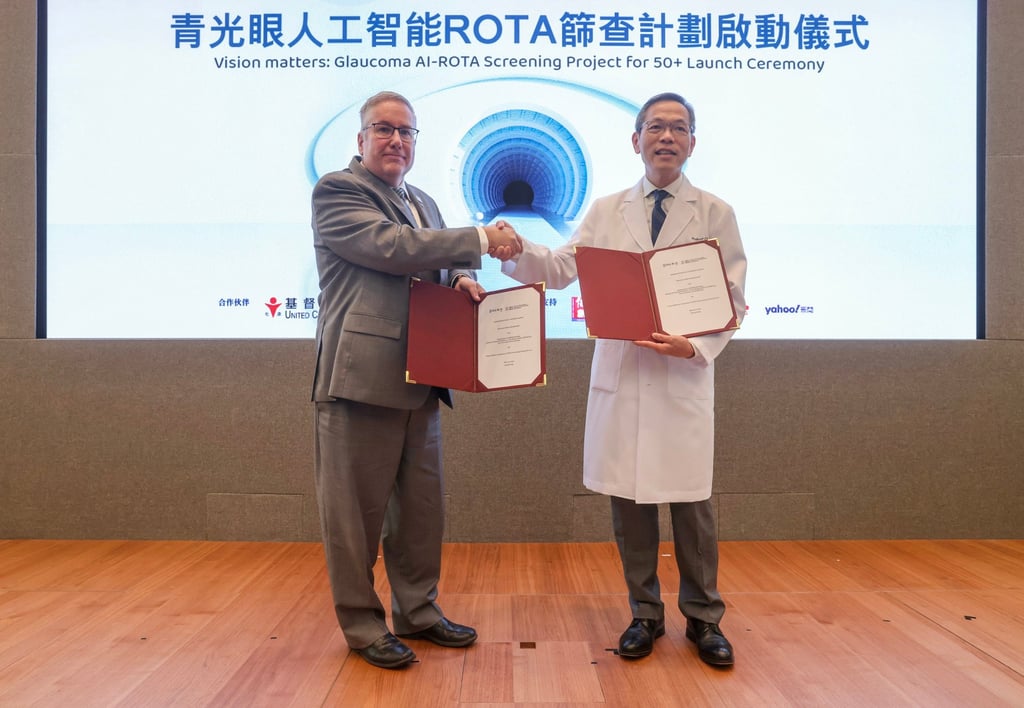
Theophthalmology department at the University of Hong Kong (HKU) and Orbis, a non-profit specialising in blindness prevention, on Monday said they would use ROTA, an optical texture analysis technology developed and patented by the university, for the first time to display the anatomy of the nerve fibre layer of the retina so doctors could check for signs of degeneration linked to glaucoma.
“Our shared aim is to raise public awareness of glaucoma and remind Hongkongers why it’s so vital they undergo regular eye checks,” said Derek Hodkey, president and chief executive of Orbis International.
Glaucoma is a common condition where the optic nerve, which connects the eye to the brain, becomes damaged. It is usually caused by fluid build-up in the front part of the eye, which increases pressure on the nerve.