Hong Kong hospital admits to making clinical errors in treating premature infant but says protocols followed
- Prince of Wales Hospital says double-checking three-way valve that delivered medicine to newborn was not included in nursing protocols
- But guidelines now updated and committee will carry out investigation, hospital chief executive Dr Chung Kin-lai

A major public hospital in Hong Kong has admitted it made clinical errors in the treatment of a premature baby who later died, but said double-checking a three-way valve that delivered medicine to the newborn was not included in nursing protocols.
The Prince of Wales Hospital on Friday stopped short of saying the incident was caused solely by staff, adding it had updated its guidelines and would accept full responsibility for what happened.
“We are not trying to find an excuse,” hospital chief executive Dr Chung Kin-lai said. “The situation is not as simple as you would imagine. There are many tubes and three-way valves applied on such a small infant … With the many conditions, I am concerned whether it was really that easy to spot if the valve was correctly adjusted.”
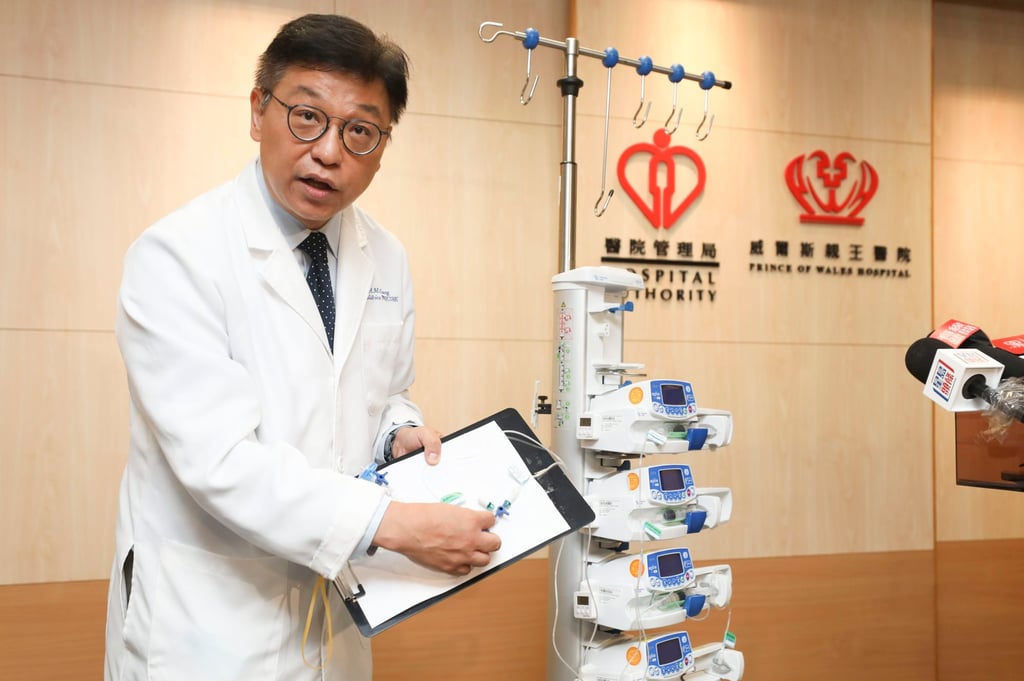
A committee had been set up to investigate the cause of the incident and would deliver a report in eight weeks, he said. A letter had been sent to the contractor that supplied the device about reviewing its design and enhancing safety features, he added.
Chung said the hospital would bear responsibility and continue to provide emotional support to the family. Two nurses and two doctors involved in the case were now on leave.
The hospital said the infant, born more than two months premature with a congenital heart problem, was one of a set of twins delivered on Monday. The mother was in the 27th week of her pregnancy and an early delivery was deemed necessary after one of the twins developed an abnormal heartbeat, according to Dr Fung Lai-wah, the chief of service of the paediatrics department.
The baby was admitted to the neonatal intensive care unit, placed on assisted ventilation and given inotropes, which help to control heart contractions, including adrenaline.