Hong Kong-led team develops blood test that can catch dementia in early stages, with nearly 90% accuracy
- Previously identifying patients suffering from early stages of condition was difficult, as doctors had to rely on clinical assessment, university team says
- Early identification can allow for treatment options that would be otherwise unavailable if condition had progressed, according to researchers

An international team led by Hong Kong researchers has developed a blood test it claims can identify the early stages of dementia with an accuracy rate of nearly 90 per cent, allowing for treatment before the onset of symptoms of the neurodegenerative condition.
The test was being offered by a private company at a cost of about HK$7,000 (US$895), and discussions were under way over making it available in the public health sector, researchers from the Hong Kong University of Science and Technology, which led the team, said on Monday.
“If an early diagnosis can be made, the heavy burden brought by the disease on families and the communities can be greatly alleviated,” team head and university president Professor Nancy Ip Yuk-yu said. “Early stage patients can have effective management and treatment in a timely manner.”
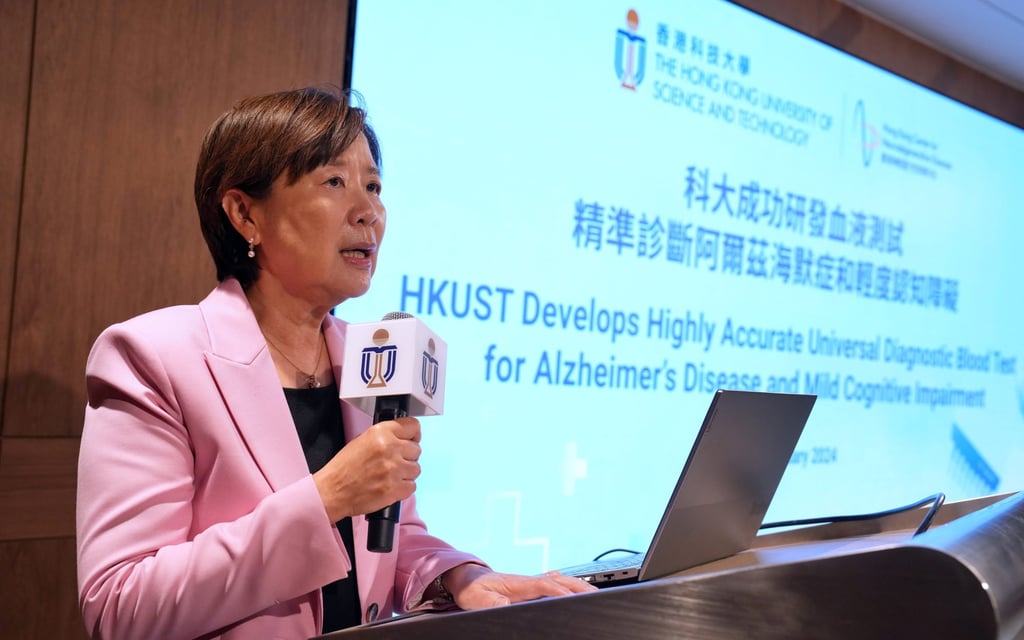
The research team previously developed a blood test that could identify Alzheimer’s disease, with a claimed accuracy rate of more than 96 per cent, but the latest version of the screening can discover the condition in its early stages.
The latest test has an accuracy rate of more than 87 per cent, according to the team.
Ip said that in the past it was difficult to identify patients suffering from the early stages of the condition, as doctors had to rely on a clinical assessment, which could be subjective.
Patients were usually aware of the need to see doctors only when they had developed symptoms, but that was the time when the disease had advanced to a stage too late for effective treatment, she said.
“An easy, precise and minimally invasive blood test can provide a feasible solution for early diagnosis of Alzheimer’s disease around the world,” Ip said.