Advertisement
Targeted drug, radiotherapy could prolong lives of liver cancer patients with resistance to immunotherapy, Hong Kong studies find
- Chinese University researchers say patients in trial took oral targeted therapy once a day and underwent scans every six weeks
- After treatment, trial participants had median survival period of 14.3 months, while condition of 76.6 per cent of them became stable
2-MIN READ2-MIN

A targeted drug and radiotherapy could extend the lives of liver cancer patients who developed resistance to immunotherapy, according to a pair of Hong Kong studies.
Researchers from the Chinese University of Hong Kong said their findings would pave the way for changing therapy guidelines for those not responding to immunotherapy, the primary choice of treatment in advanced cases.
“Currently, there is no set course [for treatment] if immunotherapy becomes ineffective,” said Stephen Chan Lam, professor at the university’s clinical oncology department.
“Our data shows doctors in Hong Kong and all over the world that targeted therapy can be used if a patient develops resistance to immunotherapy.”
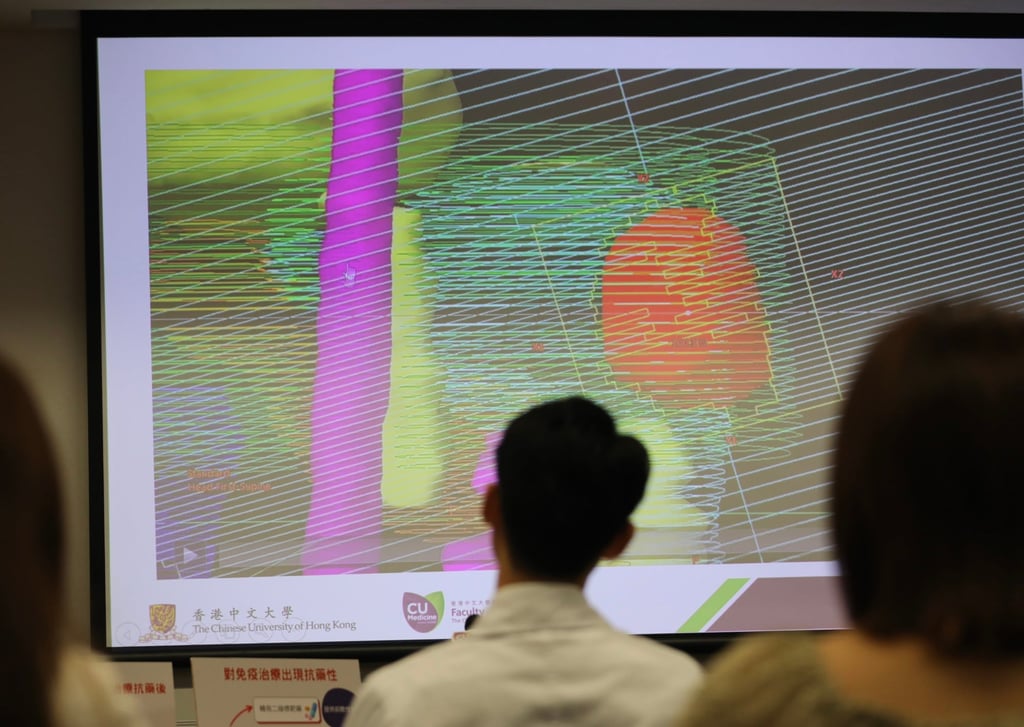
Forty-seven liver cancer patients were recruited between October 2020 and May 2022 for the study that looked into the use of targeted therapy and was conducted in collaboration with two research facilities in South Korea.
Advertisement
Select Voice
Select Speed
1.00x