Plan to build public housing on Fanling golf course not cost effective and full of double standards, top Hong Kong government adviser says
- Administration should consider scrapping plans by predecessor to build about 12,000 public housing flats on Fanling course, says Executive Council convenor Regina Ip
- Advisory Council on the Environment to discuss environmental impact assessment on Monday before deciding on next step for golf club, which counts elites among its 2,600 members, including Ip

Hong Kong’s new administration should consider scrapping plans by its predecessor to build about 12,000 public housing flats on an exclusive golf course, the city’s top government adviser has suggested, arguing the proposed development was not cost-effective and reflected “double standards”.
Regina Ip Lau Suk-yee, convenor of the Executive Council, the city’s top decision-making body, on Sunday pointed to the results of an environmental impact assessment on the proposal to redevelop 32 hectares (79 acres) of the 172-hectare Fanling site to build homes for roughly 33,600 people.
It found only 9 hectares could be used for housing, according to Ip, who noted the North District Council and the Sheung Shui Rural Committee had already objected to trying to accommodating the proposed number of residents in what they called a “small area”.
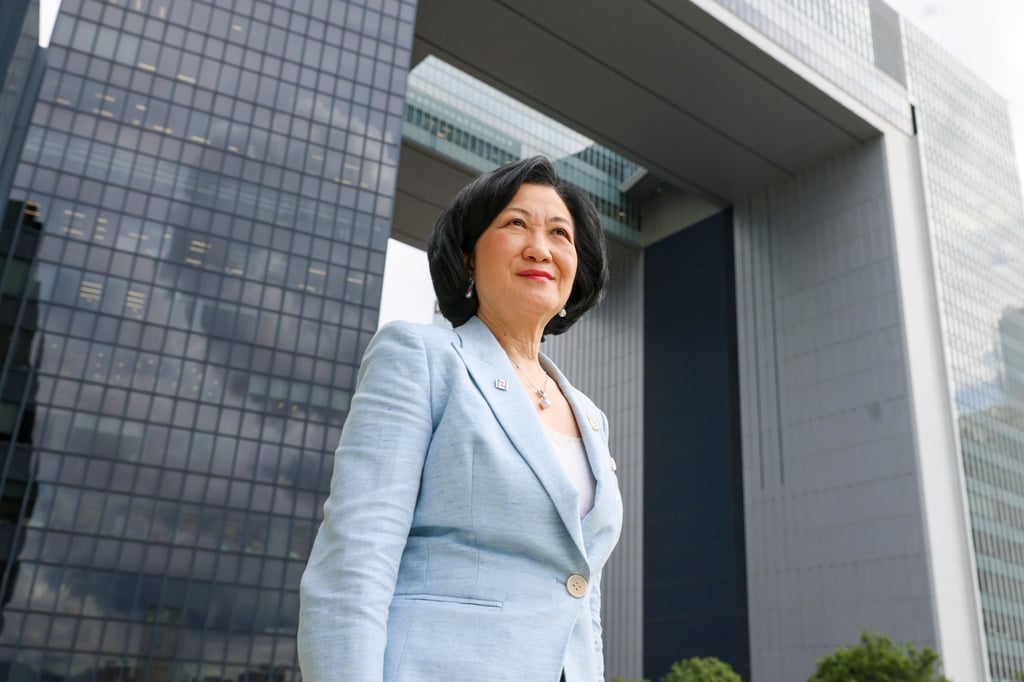
“I hope the administration, which always vows to listen to public opinion, will consider whether to press ahead with the plan by the previous government to destroy the golf course with such a long history and ecological value,” Ip said, adding she had not yet conveyed her views to Chief Executive John Lee Ka-chiu.
In a paper submitted to the North District Council in May, the administration of Carrie Lam Cheng Yuet-ngor proposed building the public housing flats, which would amount to more than one-third of the government’s annual target of 33,000, in the northernmost part of the site located east of Fan Kam Road, also known as the Old Course. The remaining redeveloped area, which would be of medium and high ecological value, would be used for conservation and public recreation.
The idea of redeveloping the city’s showpiece golf course was one of the most controversial plans suggested by the Task Force on Land Supply, Lam’s brainchild, that was later adopted by the then Exco to tackle the city’s acute shortage of land for housing. The plan was generally well-received by the members of the public, but drew the ire of the club members and business elites.
The government leases the land to the Hong Kong Golf Club, which counts political and business elites among its 2,600 members, including Ip, who told the Post she did not hold a debenture. While serving on Lam’s Exco, Ip’s council colleagues Joseph Yam Chi-kwong, lawmaker Jeffrey Lam Kin-fung and Senior Counsel Ronny Tong Ka-wah also said they were members as part of disclosure requirements to prevent conflicts of interest.