Army of 300 volunteer law enforcement officers to help clear debris across Hong Kong after Typhoon Mangkhut
Members of Hong Kong’s disciplined forces will give up their free time to help remove fallen trees and clear streets after storm

Hundreds of Hong Kong’s law enforcement officers will join hands and form a voluntary group to clean up and remove debris, particularly fallen trees, left behind by Typhoon Mangkhut.
Coordinated by the Chief Executive’s Office, a government source told the South China Morning Post that the office hoped to recruit more than 300 volunteers from the disciplined forces, such as the fire services department, the police force and the customs authority, to help with the clean-up across the city in their spare time.
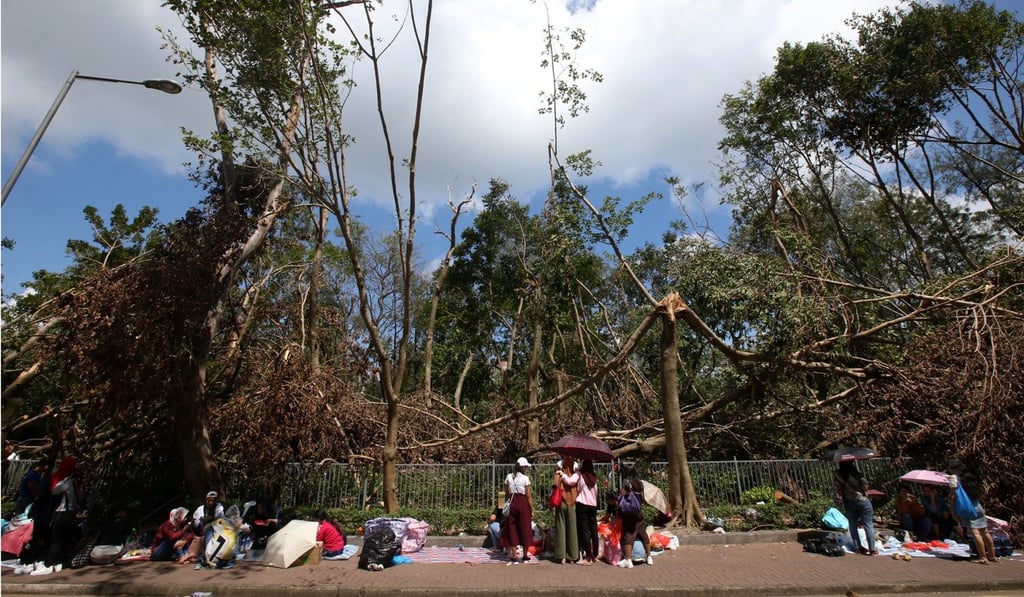
The move came after Mangkhut, the most intense storm to hit Hong Kong since records began with a 10-hour long typhoon No 10 signal on September 16, smashed hundreds of windows, uprooted more than 17,000 trees and blocked more than 1,000 roads.
Thousands of government workers and contractors have been deployed every day since the storm passed to clear the debris and toppled trees, but restoration in some of the hardest-hit areas is expected to take months.
“Each disciplinary force has its own volunteer group. These members have hoped to do something for Hong Kong,” another source said. “We hope the city could be restored to its normal state as soon as possible.”
The source said the team of volunteers would start planning the operation on Thursday at the earliest.
“We have to check out the situation in different districts to decide how many people and tools would be needed first,” he said. “Then the volunteers would start clearing the obstacles on the day after.”