Controversial small-house policy is constitutional only on private land, Hong Kong High Court rules in landmark hearing
- Rural leaders say ruling will ‘not deeply affect’ their right to build houses
- Judicial review came amid a heated public debate over how to source more land to solve city’s housing crisis

The High Court on Monday handed a partial victory to Hong Kong’s male indigenous villagers, upholding their right to build three-storey homes in the New Territories, but ruling that the entitlement was constitutional only for private land.
In the unprecedented judicial review of the controversial small-house policy, Mr Justice Anderson Chow Ka-ming ruled that the entitlement – known as Ding rights – should not apply to land granted by, or exchanged with, the government, as that would be unconstitutional and unlawful.
The court still has to make another ruling on how to fix this aspect of the policy, which is a highly sensitive issue given Hong Kong’s struggle to source more land to solve its acute housing shortage, and the judge has given the parties concerned three more weeks to make the relevant submissions.
But Chow made clear, in concluding what he described as a difficult case, that any remedy would not invalidate or affect small-house grants made prior to the date on which his judgment would take effect.
“In view of the importance of this matter to the New Territories indigenous inhabitants and the general public of Hong Kong, the implications that this judgment may have on government land administration, and the likelihood of an appeal to the Court of Appeal and eventually to the Court of Final Appeal, I direct that this judgment shall not take effect until after the expiration of six months from the date hereof,” he wrote in his 96-page ruling.
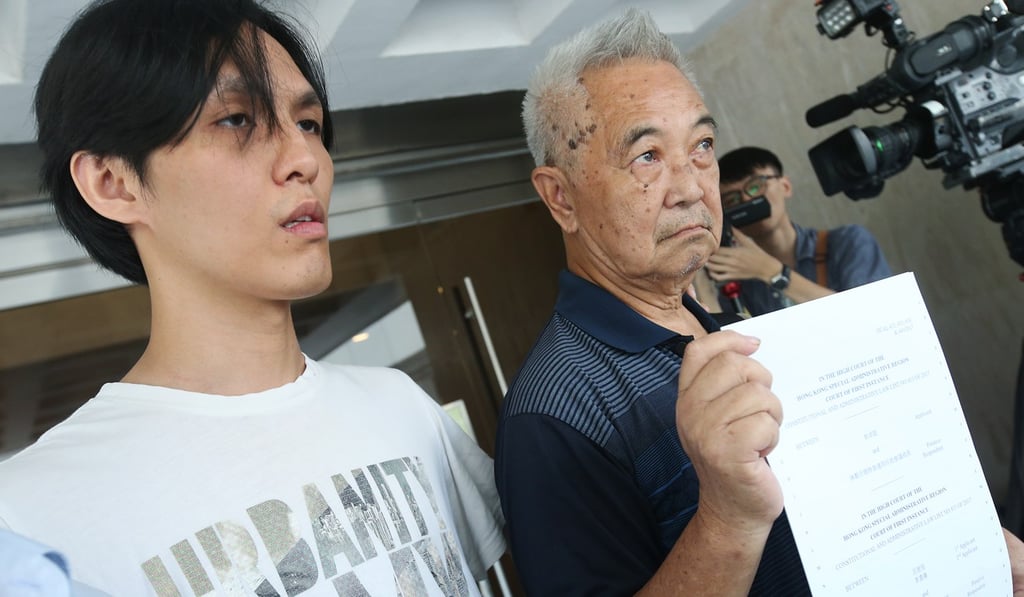
Judicial review applicant Kwok Cheuk-kin, a former civil servant known for taking the government to court on previous occasions, said he would continue to appeal until he won, because he was only partly satisfied.