Advertisement
Hong Kong courts
Hong KongLaw and Crime

Hong Kong protests: ‘joint enterprise’ doctrine urged by prosecutors could implicate those not at scene of illegal gathering, riot

  • Interpretation sought stems from first riot case over 2019 anti-government movement in which three defendants were acquitted
  • If applied, defence lawyers argue driver of a car or supplier of resources could also be charged if those they aided went on to commit crimes

Reading Time:2 minutes
Why you can trust SCMP
Hong Kong was rocked by months of social unrest in 2019, with court cases involving arrested protesters still ongoing. Photo: Handout
Jasmine Siu
Hong Kong prosecutors have urged the city’s appeal court to apply a legal principle that would have far-reaching implications for protest cases, ensuring that even those not physically present at an unlawful assembly or riot can face the same charges.
The debate stemmed from the first riot case of the 2019 anti-government movement, in which District Judge Anthony Kwok Kai-on ruled that the unique corporate nature of both charges required offenders to have “assembled together” at a crime scene.
All three defendants – student Natalie Lee Yuen-yui, 17, gym owner Tong Wai-hung, 39, and his wife, Elaine To, 42 – were acquitted of rioting in Sai Wan on July 28, 2019, after the judge concluded there was no evidence they had assembled in common purpose with protesters.
Advertisement

Without seeking a reversal of these acquittals, prosecutor Eric Kwok Tung-ming SC on Monday argued for the application of the common law doctrine of “joint enterprise”, on the basis that it had not been in any way excluded by the provisions that created the two offences commonly used in prosecuting protesters.

Kwok said the application was not limited to those present at the scene, as the phrase “takes part in” used in the Public Order Ordinance implied secondary liability – covering those who aid or abet the crime – and the requirement of assembling together applied only to the principle offender.
Advertisement
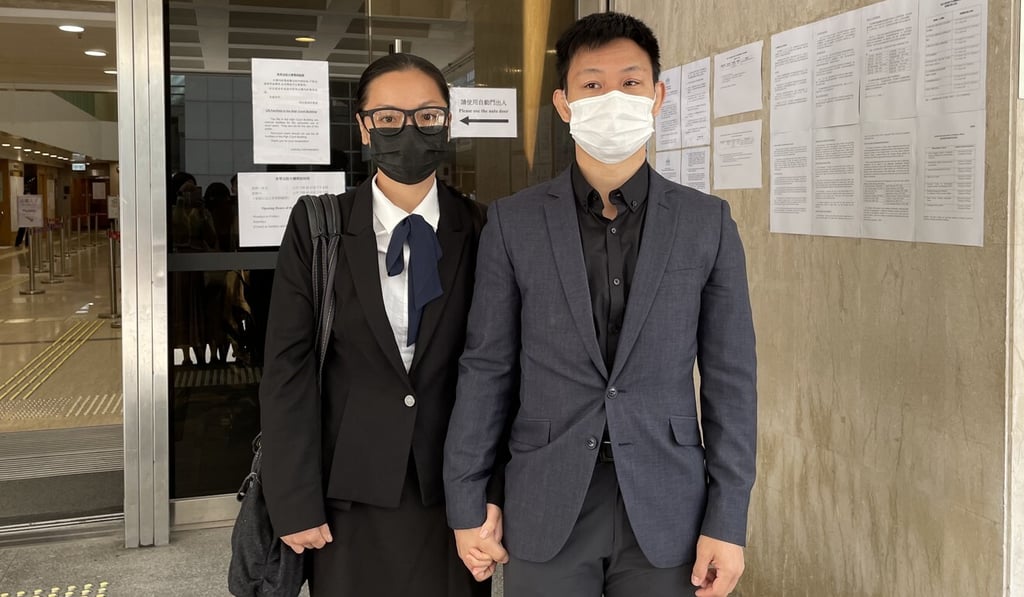
Elaine To (left) and husband Tong Wai-hung leaving the High Court on Monday. Photo: Jasmine Siu

The interpretation, if accepted, would implicate participants who were not physically present – such as a lookout, a driver of a getaway car or a supplier of resources – as well as those who were only arrested at a certain distance away from the scene after pursuit.

Advertisement
Select Voice
Choose your listening speed
Get through articles 2x faster
1.25x
250 WPM
Slow
Average
Fast
1.25x