Over threefold rise in drug-related internet posts in Hong Kong in 6 years, with growing interest in CBD products, study finds
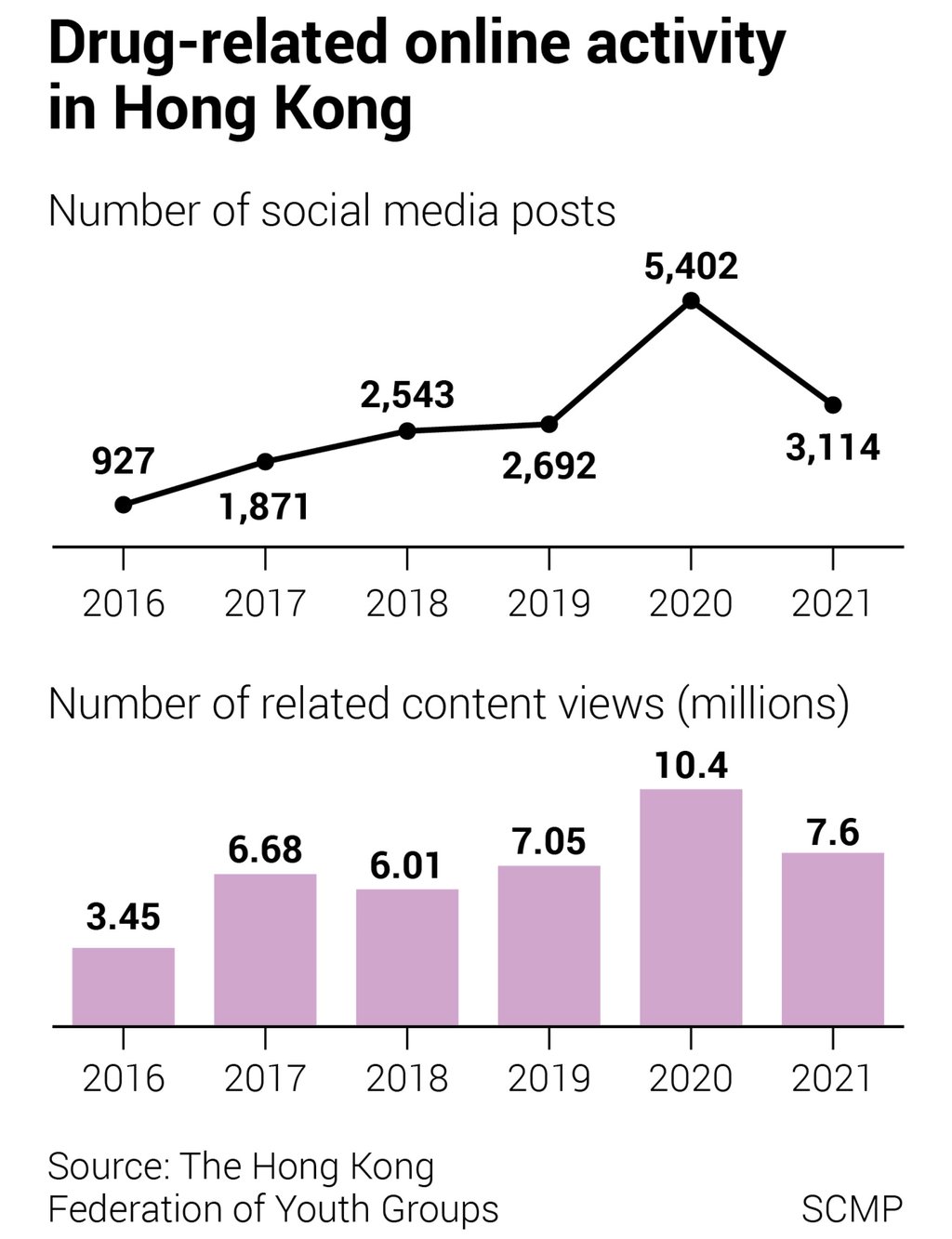
- Research by Hong Kong Federation of Youth Groups shows social media content featuring drugs rose from 927 in 2016 to 3,114 by the end of last year
- Organisation also takes aim at cannabidiols, arguing products using substance could become gateway for youngsters to use other drugs

The number of drug-related social media posts in Hong Kong has more than tripled over the past six years, a study by a local youth group has shown, with internet users also taking a greater interest in cannabidiol (CBD) as authorities eye a ban on the substance.
The study by the Hong Kong Federation of Youth Groups, which was released on Thursday, found the number of social media posts featuring drugs had risen from 927 in 2016 to 3,114 by the end of last year. Over the same period, the number of related views rose from about 3.4 million to 7.6 million.
Michael Leung Siu-kei, the officer-in-charge of the federation’s youth crime prevention centre, attributed some of the more recent interest to the Covid-19 pandemic, with many residents using social media more often while confined to their homes.
Content on CBD products also attracted more social media traffic over the course of the pandemic, with the number of related views increasing from 5,707 in 2019 to 11,840 in 2020 and 43,980 in 2021.
“CBD, in particular, has recently been advertised as stress-relief and healthcare products for enticement, lowering the wariness among young people,” said Bob Lee Siu-chui, a supervisor of the federation’s youth crime prevention centre.
One of more than 100 chemical compounds found in marijuana plants, CBD is currently legal in Hong Kong as long as it does not contain traces of tetrahydrocannabinol (THC), another active ingredient found in cannabis that gives users a “high” feeling.
“Some products may contain THC, an easily addictive substance that is regulated by the Dangerous Drugs Ordinance,” Lee said, adding that she was worried CBD could become a gateway for young people to use and sell other drugs.