Hong Kong leader unveils details of domestic national security legislation required under Article 23
- Proposed law targets treason, insurrection, sabotage, foreign interference, theft of state secrets and espionage
- ‘The new law aims to create a stable and safe environment so that when people attack us, we will be protected,’ city leader John Lee says

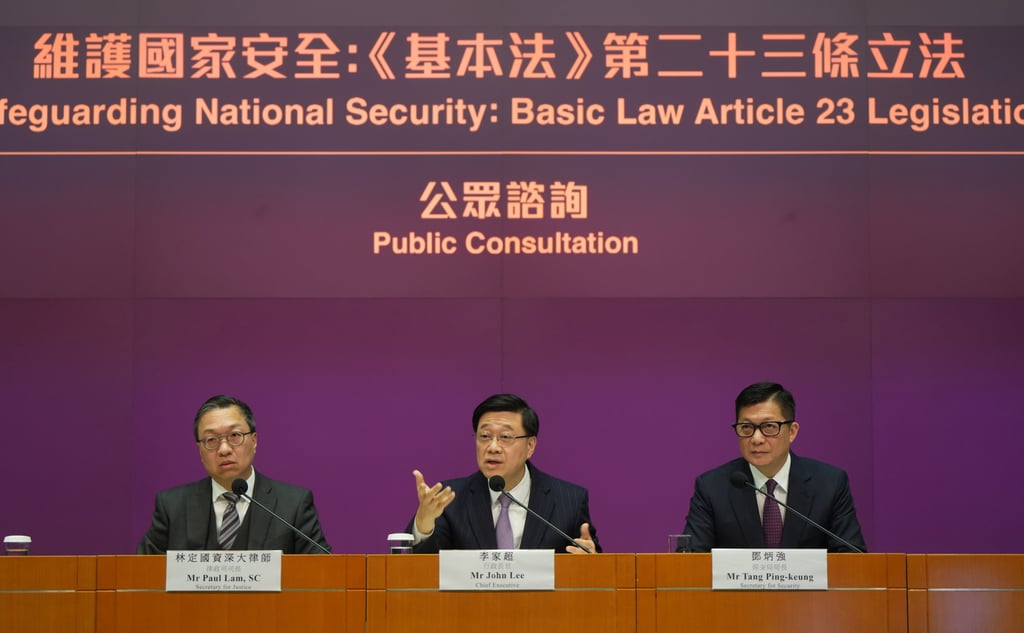
Hong Kong’s leader has unveiled plans to enact sweeping domestic national security legislation targeting treason, insurrection, sabotage, foreign interference, theft of state secrets and espionage, promoting it as a “defensive law” to ward off attacks against the city amid escalating geopolitical tensions between China and the West.
“The new law aims to create a stable and safe environment so that when people attack us, we will be protected. This is a law to tell people not to attack us. It is, in a way, a defensive law,” Lee said.
“I hope people will see the law and know that they may try somewhere else rather than Hong Kong.”
Officials said law-abiding citizens would have nothing to fear, while they would be open to further discussing any need for exemptions based on public feedback.
It will be the city’s second attempt to enact the contentious legislation after the government’s last bid in 2003 sparked strong public opposition which forced the withdrawal of the bill.