Hong Kong proposes life sentence in new Article 23 bill for crimes such as treason and insurrection, but analysts say maximum penalty rarely imposed
- Penalty takes aim at social unrest in 2019 during which major infrastructure such as MTR stations, the airport, roads and traffic lights were vandalised
- Government says dealing with ‘large-scale violence’ in 2019 as a ‘riot’ offence failed to adequately reflect the nature of the violence in endangering national security

Offenders can be jailed for life for committing four crimes under Hong Kong’s newly proposed domestic national security law that covers treason, insurrection, collusion with external forces to damage public infrastructure and inciting members of the Chinese armed forces to mutiny.
Set out in the bill gazetted on Friday, the heaviest form of penalty took aim at the “sabotage activities” and “insurrection” by protesters during the social unrest in 2019, during which major infrastructure such as MTR stations, the airport, roads and traffic lights were vandalised.
According to the bill, a sabotage activity that damages or weakens a public infrastructure with an intent to endanger national security could lead to up to 20 years of jail. However, one could face a life sentence, if he or she commits the same offence by colluding with an external force.
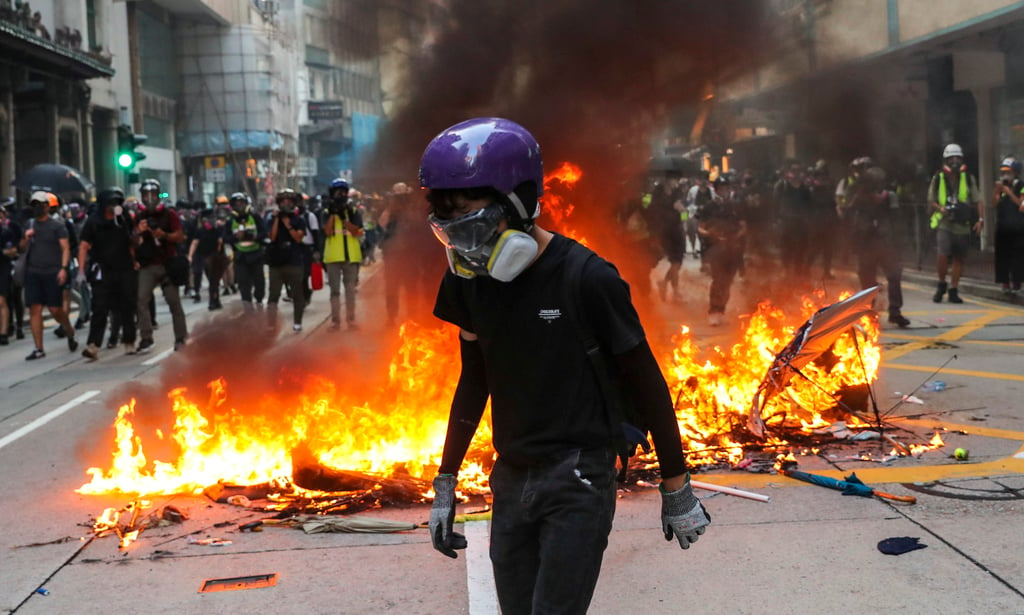
Any facility, network, computer, electronic system, office premises or national defence facility that belongs to or is occupied by the central or local authorities, whether it is situated in the city or not, is regarded as a public infrastructure.
Public transport facilities and those providing public services, such as water, electricity, drainage and the internet, that are located in the city are also included.
The sabotage offence also applies to people outside the city.
In the consultation paper, the government highlighted the large-scale demonstrations and extensive damage to public infrastructure that had posed national security risks to the city.