Advertisement
Hong Kong Basic Law
Hong KongLaw and Crime

Will the new leaders of the Hong Kong Bar Association be any more effective with Beijing?

A look at what local and mainland experts are saying about the prospects for success

Reading Time:5 minutes
Why you can trust SCMP
The victor and the vanquished: Bar Association chairman Philip Dykes and outgoing head Paul Lam after the election results were announced early Friday morning in Central. Photo: Sam Tsang
Phila Siu,Kimmy ChungandChris Lau

The upset victory that prominent human rights lawyer Philip Dykes secured on Thursday night in the Hong Kong Bar Association election raised a question many have pondered: could the influential group get its messages and concerns about implementing “one country, two systems” across more effectively to Beijing than its predecessors?

The Post has spoken to mainland and local experts on whether Beijing would be willing to listen to the new leaders of the Hong Kong Bar Association now that more liberal-minded leaders are at its helm.

The association pays an annual visit to the Chinese capital to meet key officials overseeing Hong Kong affairs. Last November, it met Zhang Xiaoming, director of the State Council’s Hong Kong and Macau Affairs Office, as well as Li Fei, chairman of the Basic Law Committee, which falls under China’s top legislative body.
Advertisement
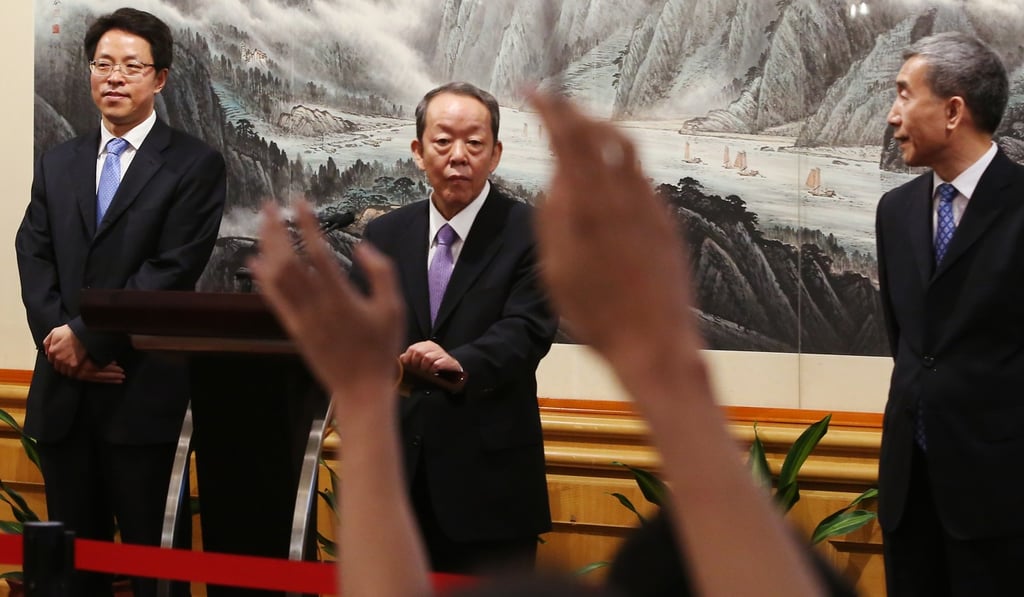
Beijing officials Zhang Xiaoming (left), Wang Guangya and Li Fei meeting the media in Shenzhen last May. Photo: Sam Tsang
During its visit, the association expressed concern about how one country, two systems was being implemented in Hong Kong, which is to enjoy a high degree of autonomy from Chinese rule until 2047. The barristers also raised doubts about the legality of the joint checkpoint or “co-location” arrangement that would allow mainland officers to enforce national laws in an area of Hong Kong’s West Kowloon high speed cross-border rail terminus.
Advertisement

While it did not appear that Beijing changed its mind about the legality of the arrangement, the visit was regarded as a chance at least to convey Hongkongers’ apprehensions to the central government.

Advertisement
Select Voice
Choose your listening speed
Get through articles 2x faster
1.25x
250 WPM
Slow
Average
Fast
1.25x