Class of ’97: The magic of Cantonese opera helps Jackie Leung feel connected with Hong Kong
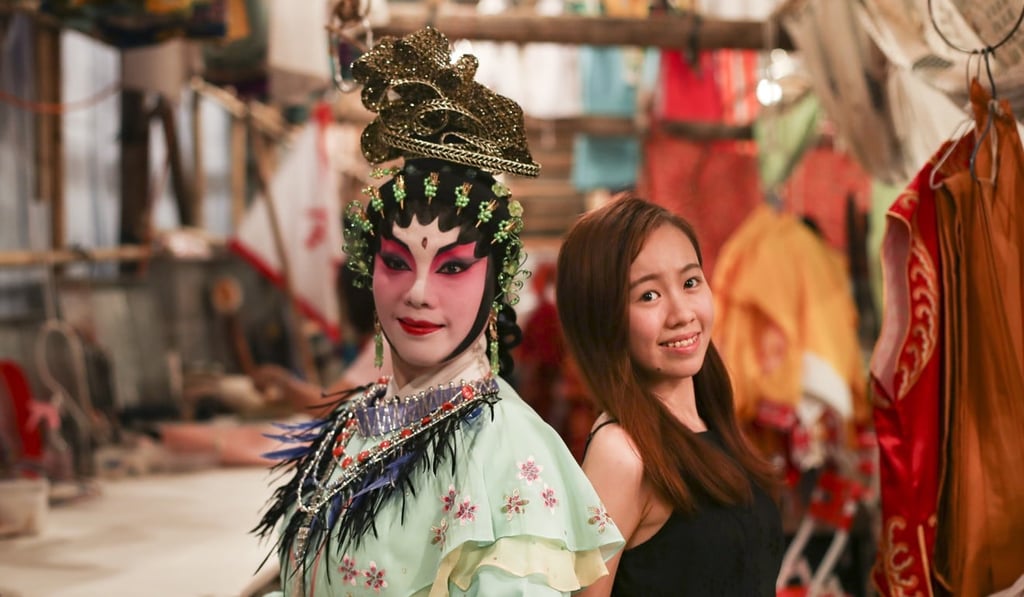
Currently studying law and politics at HKU, Leung’s ambition is to save up to be professional singer, performing in theatres erected during festivals to honour folklore deities

Meet the class of ’97, born the year of the handover. Their childhoods tell the stories of Hong Kong’s first two decades after the return to China. Some remember Sars, others took part in Occupy. Now, they’re trying to work out what their future holds – and how Hong Kong’s own uncertain future fits into their plans.
Jackie Leung
You won’t find many 19 year olds at a rickety bamboo theatre, performing traditional Cantonese opera in silk robes, their faces covered in thick, colourful make-up.
For Jackie Leung, the temporary structures with their leaky tin roofs and wafting incense are, since she was first introduced to them as a toddler by her mother, the best places to be. Performing the ancient art form isn’t just a hobby – it’s a reason why the city is part of her future.
“I just feel very magical and very happy every time I go on stage,” she says. “Doing Cantonese opera makes me feel more connected with this place, and that’s one of the reasons why I feel, even though the future of Hong Kong is a bit pessimistic, I would still want to stay.”
Currently Leung is studying law and politics at the University of Hong Kong, and wants to be a lawyer. But her ambition is to save up to be a professional Cantonese opera singer, performing in theatres erected during festivals to honour folklore deities. Leung, who lives in Kennedy Town, admits friends think it is “a bit weird”.
“Not many young people would want to watch [opera] for even 15 minutes,” she says.
“I think one of the reasons I identify myself as a Hongkonger is that I am a Cantonese opera performer. If you’re addicted to a traditional local art form, it sort of makes you feel connected with this place more,” she said.