Hong Kong’s controversial China rail checkpoint bill finally passed by lawmakers amid protests, delays and expulsions
Long-debated plan at last gets green light for rail station border checkpoint that will see mainland Chinese laws enforced on Hong Kong soil for first time

Hong Kong’s legislature on Thursday night finally passed a bitterly contested bill to set up a joint border checkpoint with mainland China in the heart of the city after a marathon debate that saw attempts to delay the vote descend into chaos.
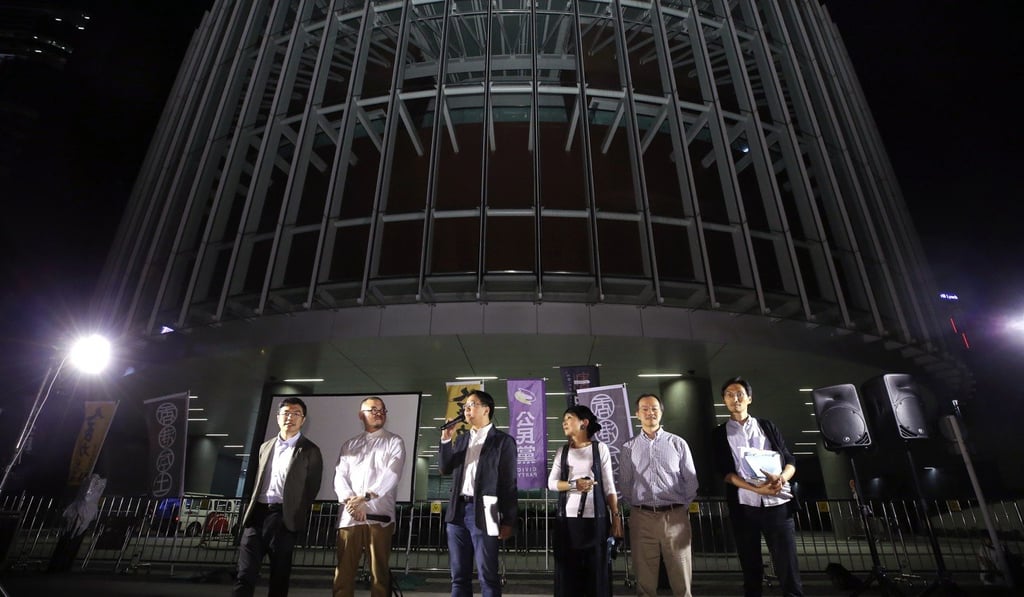
In a reflection of the controversy surrounding the issue, around 300 demonstrators gathered outside the Legco building at Tamar to watch a live broadcast of the vote and debate preceding it – those backing the bill were outnumbered by protesters opposing it.
Lawmakers resumed the final debate on Wednesday and Thursday following deliberations last week on the proposed legislation.
Discussion on the second reading of the bill in the chamber began last Wednesday, following three months of scrutiny by a bills committee during which opposition lawmakers accused the government of failing to address their concerns.
Thursday’s discussions mainly centred on 24 amendments proposed by nine filibustering pan-democrat lawmakers.