Four years on from failed Occupy protests, what next for Hong Kong’s deflated democracy movement?
Disillusioned by Beijing’s refusal to budge despite 79 days of street protests four years ago, campaigners for universal suffrage are frustrated, splintered, and some have been radicalised. With the heady optimism of 2014 a distant memory, which way forward for those still chasing ‘one man, one vote’?

Four years after tens of thousands of young people took to Hong Kong streets during the Occupy movement’s pro-democracy protests, the fierce calls for universal suffrage have all but died away.
Instead, the focus of attention has shifted more recently to calls for Hong Kong independence – a cause supported by only a few, yet controversial enough to draw the ire of Beijing.
On Monday, it led to the government taking the unprecedented step of banning the small Hong Kong National Party on the grounds that its calls for independence threatened national security and public order.
Many in the pro-democracy bloc appear to be still recovering from the failure of the Occupy protests to move Beijing, despite lasting 79 days and paralysing key areas in the city.
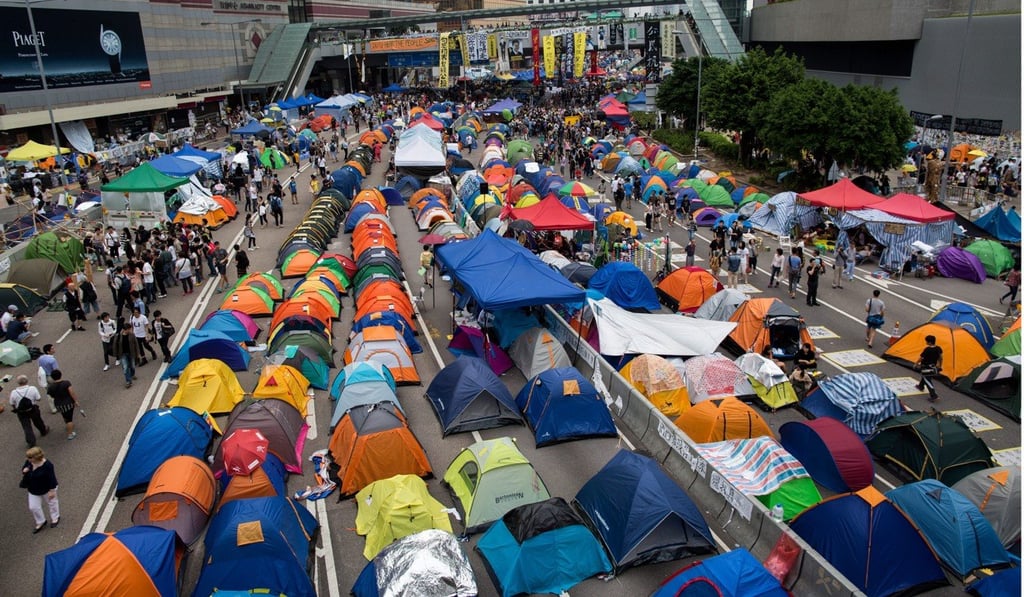
“We have exhausted practically every means to fight for democracy as we launched the civil disobedience movement in 2014,” said Occupy co-founder Dr Chan Kin-man, a sociologist at Chinese University.