Protest on fifth anniversary of ‘831 framework’ in Hong Kong a reminder electoral reform remains a burning issue
- Stringent measures handed down by Beijing for election of city’s chief executive triggered protests that led to Occupy Central
- Government remains non-committal on universal suffrage though opposition says matter is at root of recent turmoil

On the same date five years ago, amid a familiar sense of anger and frustration, thousands of Hongkongers gathered in Tamar Park in Admiralty, vowing to protest against Beijing’s decision to control the electoral process in the city.
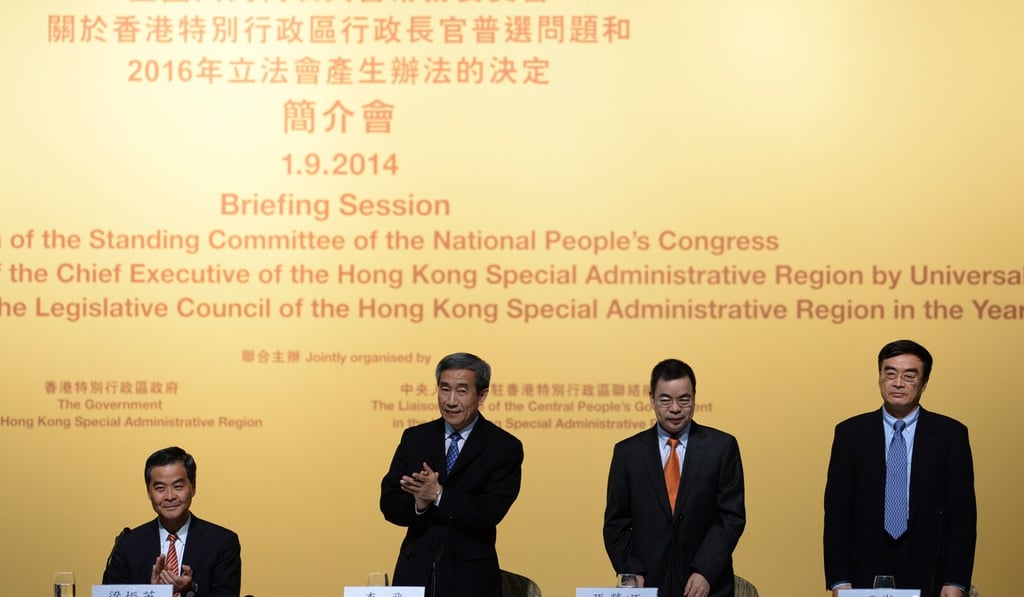
Their solidarity came hours after the National People’s Congress Standing Committee – the country’s top legislative body – handed down the “831 [August 31] framework”, which would effectively allow the central government to screen candidates in the local elections for the chief executive.
The stringent framework eventually triggered the pro-democracy Occupy movement on September 28, 2014, which paralysed part of the city’s business hubs in an unprecedented lockdown for 79 days.
Fast-forward to 2019, tens of thousands of Hongkongers defied a police ban to again join a march, which marked the fifth anniversary of Beijing’s announcement of the framework which was eventually rejected by Hong Kong.
“The government needs to heed the young generation’s opinions. They’re the future of Hong Kong and they should have a say in how to elect the city’s leader,” said Sai, a 63-year-old retiree who joined the Saturday march.