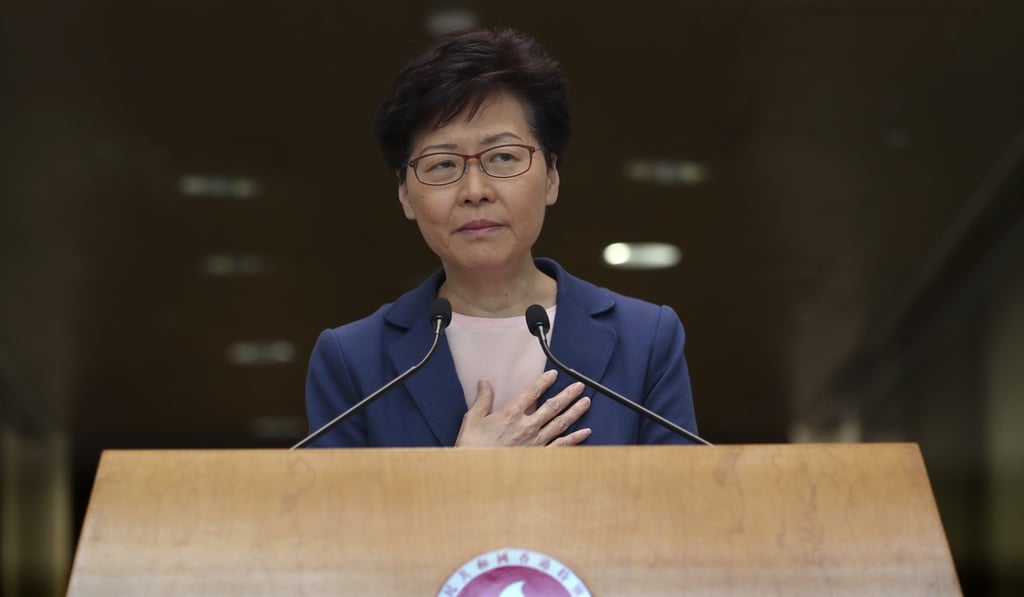
Hong Kong protests: what is the difference between Carrie Lam suspending and withdrawing extradition bill?
- After months of political turmoil and violent protests, city leader confirms she will officially withdraw despised bill
- The Post looks at why Lam’s administration refused to do so earlier and what happens next

Three months into anti-government protests, Hong Kong leader Carrie Lam Cheng Yuet-ngor finally announced the full withdrawal of the extradition bill on Wednesday evening.
Based on parliamentary rules, the government would need to provide formal confirmation of the decision when the Legislative Council resumed next month, to officially put an end to the legislative process.
Lam had previously shelved the hated bill – which would have allowed the transfer of fugitives to jurisdictions Hong Kong lacked an extradition deal with, including mainland China – later describing it as “dead”.
Protesters have since mid-June pressed for the complete withdrawal of the bill, along with four other key demands, including setting up an independent inquiry into confrontations between police and protesters.
Below is a look at the difference between suspending the draft legislation and withdrawing it in full, and the technical procedures involved.