Hong Kong protests: how tycoons went from trusted advisers to Beijing’s ‘bogeymen’ who refused to step up
- The Chinese leadership once relied on a handful of families to help keep the city stable, but as residents’ anger swelled they blamed them for hoarding land
- Although their influence has waned slightly, the moguls remain a pillar of power in Hong Kong that Beijing is unlikely to turn its back on any time soon

Rebel City: Hong Kong’s Year of Water and Fire is a new book of essays by the South China Morning Post chronicling the political crisis triggered by the now-withdrawn extradition bill which has just marked its first anniversary. We are running excerpts from the 512-page book now available online and at bookstores
Well before Hong Kong returned to mainland China in 1997, the city’s tight group of property developers were Beijing’s main political allies.
China’s preoccupation, as the handover approached, was to ensure the city’s continued stability and that meant retaining the confidence of the business community.
“Winning the support of major property developers was its top priority,” said Anthony Cheung Bing-leung, a political scientist and former secretary for transport and housing. The post-handover political system was in fact designed to protect the interests of the business sector, he added.
The colony’s richest man, tycoon Li Ka-shing, was said to have helped shipping magnate Tung Chee-hwa land the job of Hong Kong’s first chief executive. The Post learned that in late 1995, Chinese president Jiang Zemin received a letter recommending Tung for the role. It was penned by Li and Beijing princeling Larry Yung Chi-kin, head of Citic Pacific, one of the first mainland companies to set up in Hong Kong.
Yung’s father, Rong Yiren, was China’s vice-president and had been on good terms with the late paramount leader Deng Xiaoping.
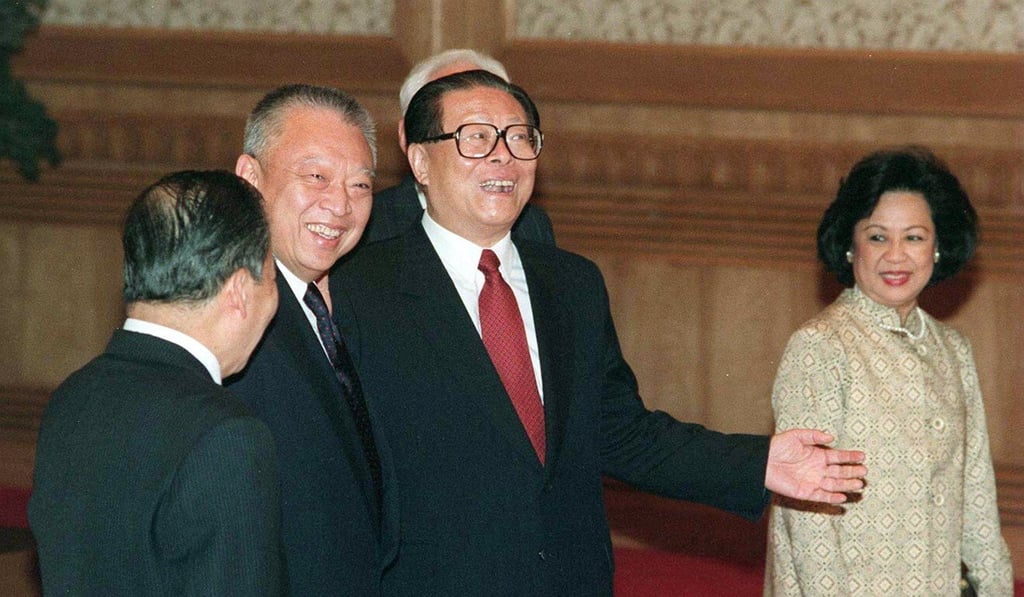
A source close to Beijing who revealed to this author the existence of the letter said that Jiang had viewed its contents positively. In January 1996, the Chinese leader set off a storm of speculation when he crossed a crowded room at the Great Hall of the People, where a handover preparatory meeting was taking place, to shake Tung’s hand. Exactly 11 months later, Tung was picked for Hong Kong’s top job.