Advertisement
ExplainerNational security law: one month after its adoption, how has Beijing’s sweeping new legislation changed Hong Kong?
- Critics say the long arm of new legislation will have a chilling effect on politics in the city, as police release wanted list of suspects who have fled
- From arrests to a mass disqualification of Legco hopefuls and pushback from social media giants, the law has been felt across a broad swathe of society
6-MIN READ6-MIN

Hong Kong’s new national security law turns one month old on Saturday. Critics have said the Beijing-imposed legislation – which gives authorities sweeping powers to target acts of secession, subversion, terrorism and collusion with foreign forces – could fundamentally reshape the international financial hub, though the central and local governments have repeatedly pledged it would target only a minority of people.
One month on, what are the changes triggered by the law?
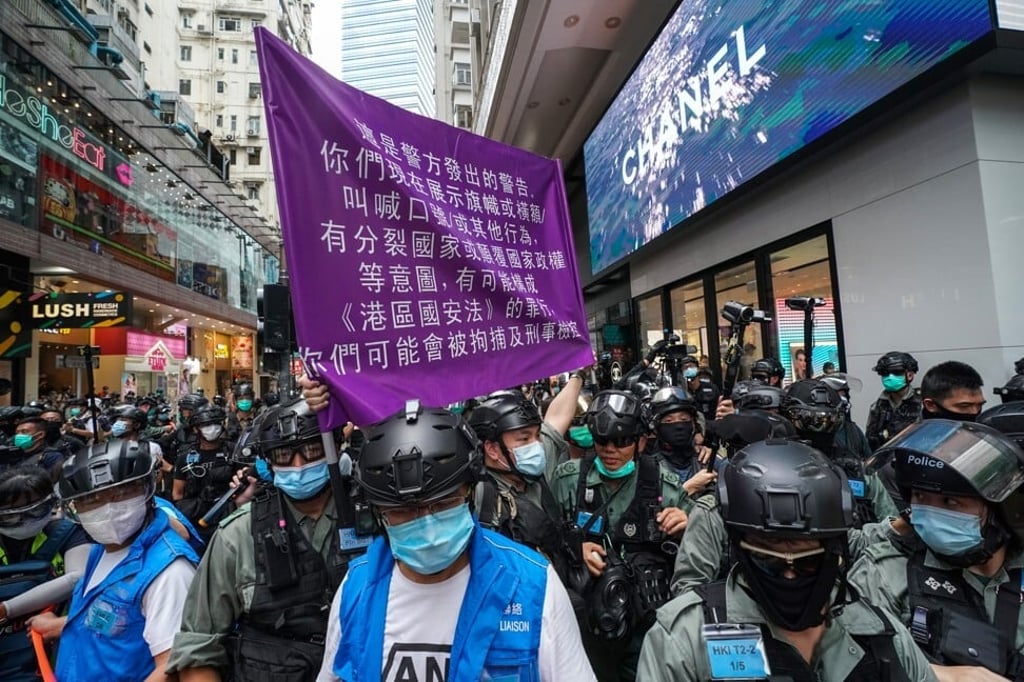
First arrests and a purple flag flies on July 1
The law was passed on the evening of June 30. The next morning, thousands of protesters went ahead with the opposition’s annual July 1 march in defiance of a police ban. At the march, police unfurled, for the first time, purple flags warning protesters they could be arrested for violating the new law.
Advertisement
By the end of the day, 10 had been detained for breaching the security legislation, along with 360 held for other offences. Most were accused of either displaying or possessing banners carrying messages deemed by the government to be pro-independence.
Only one suspect has been charged in court so far, a man accused of incitement of secession and terrorism, who allegedly rode his motorbike into a group of police officers.
Advertisement
The motorcyclist mounted on his bike a flag with the slogan “Liberate Hong Kong”, often seen at the anti-government protests of the past year. The message has been branded a call for independence by the Hong Kong government – illegal under the new law.

Advertisement
Select Voice
Select Speed
1.00x