Trump’s attack on the ‘Made-in-Hong Kong’ label expected to hurt some firms but not local pride in brand
- A US deadline is rapidly approaching for the city’s manufacturers to begin stamping their products ‘Made in China’
- Firms that rely on American buyers say the change robs them of hard-fought reputation, while others vow to carry Hong Kong name into new markets

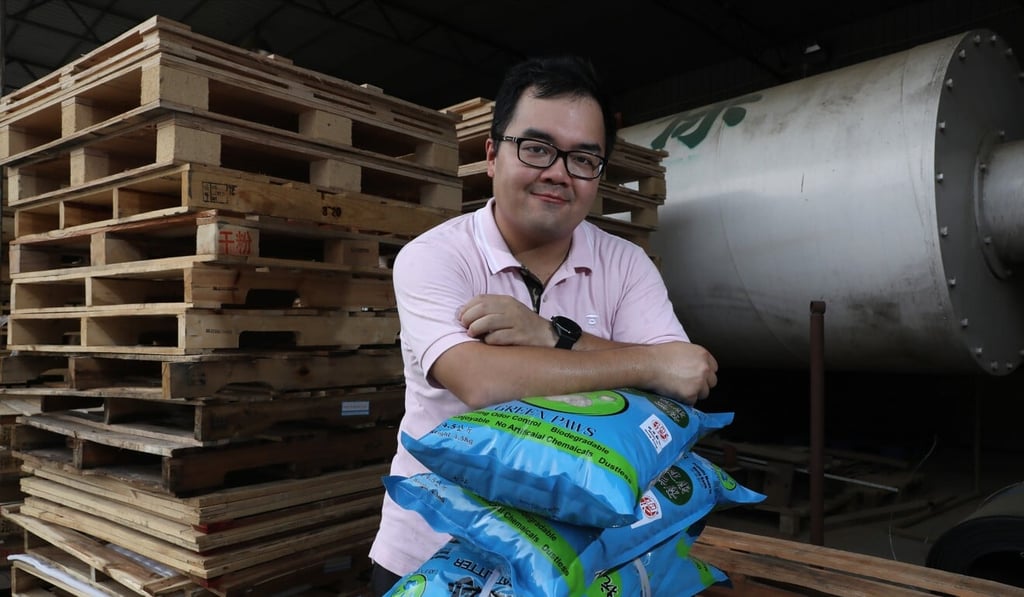
At a factory tucked away on the east of Hong Kong’s border with mainland China, entrepreneur Kelvin Shi Kam-fung rolls up his sleeves, hops into a crane and manoeuvres it to pick up heavy wooden pallets and toss them into a machine.
The sound in the 20,000 sq ft space is deafening as the machine swallows the pallets whole, grinds them up and spits out the nails sucked up by a gigantic magnet. The broken wood is processed into a final product – cat litter for sale at pet shops in Hong Kong.
Shi, 31, started his Green Paws business from scratch last year, driven by an ambition to offer environmentally friendly, “made-in-Hong Kong” products. An interior architect by training, he has seen his peers take up cushy jobs in banking and accounting, but he is determined to put his brand on shelves in markets such as Taiwan and Japan.
“I don’t mind working in this dusty factory,” he said, his shirt soaked with sweat. “This business is the first of its kind in the city and is truly 100 per cent made in Hong Kong.”
Losing that distinction would be a blow to the city’s manufacturers that either rely on the American market or have ambitions to break into it. After price, the source of origin is often the next piece of information consumers check before deciding whether to buy a product. It guides their opinion on quality and whether it is safe and reliable.