After showdown over Tiananmen vigil banned in Hong Kong, both police and residents claim victory – but what happens next?
- After authorities banned Victoria Park gathering, residents marking the event blended into the streets and showed their defiance in other ways
- Police avoided confrontation and arrested a handful of people, adopting a strategy that could be used in managing such events in the future

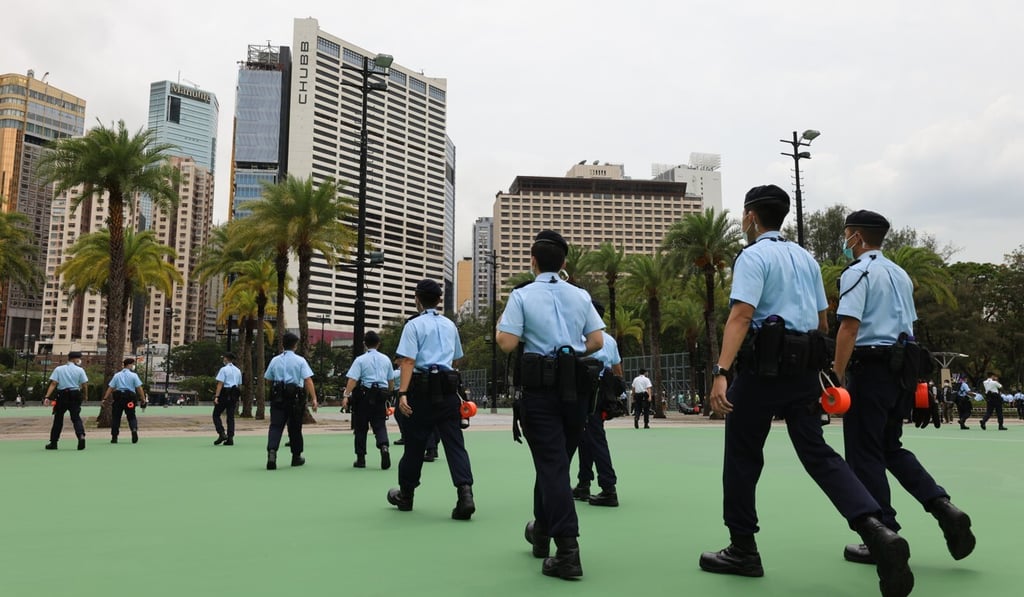
Several thousand officers patrolled the grounds and surrounding areas, erected metal barricades and orange tape, and stood on guard in the hot sun. When workers left their offices in the evening, stop-and-search operations at several crowded locations were mounted, targeting those wearing black and carrying backpacks.
As the hour of reckoning approached, a water cannon and two armoured vehicles were spotted making their way from Fanling to Hong Kong Island.
At 8pm, cocking a snook at the massive show of force, Hongkongers across the city promptly lit candles and flashed the lights on their mobile phones.
But if it was also intended to put a stop to Hong Kong’s long run as the only city in the nation with public commemorations of the Tiananmen Square crackdown, the police intervention failed. Defiant residents remained determined to memorialise the Chinese killed by security forces in June 1989, when the central government lost patience with the student-led pro-democracy protests in Beijing and other cities.