Advertisement
High Court ruling involving Hong Kong protest slogan not binding in sedition case, judge says
- The meaning of the phrase ‘Liberate Hong Kong; revolution of our times’ is central to the trial of Tam Tak-chi at the District Court
- But the judge says he has wide scope in interpreting the ruling in the city’s first national security trial where experts sought to dissect the slogan
3-MIN READ3-MIN

A ruling over the meaning of a protest slogan in Hong Kong’s first trial under the national security law has no binding power on a case in a lower court involving an opposition activist charged with sedition for uttering the same phrase, a District Court judge has said.
But Judge Stanley Chan Kwong-chi on Thursday agreed the judgment handed down earlier by the Court of First Instance was “instructional, convincing and applicable”, and questioned the need for two defence experts to testify again over the interpretation of “Liberate Hong Kong; revolution of our times”.
Tam Tak-chi, a 48-year-old former radio presenter popularly known as “Fast Beat”, is the first person to stand trial on sedition charges under the colonial-era Crimes Ordinance since Hong Kong’s handover from British to Chinese rule in 1997. The People Power vice-chairman is facing 14 charges, including eight related to uttering seditious words on various occasions.
Advertisement
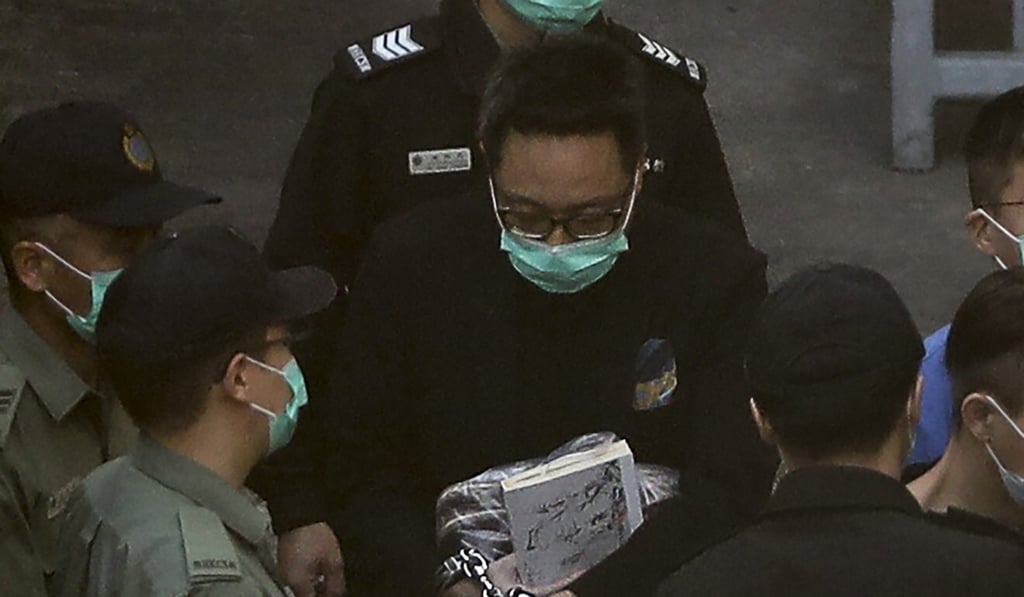
His trial resumed two days after restaurant worker Leon Tong Ying-kit, 24, was found guilty of inciting others to commit secession and engaging in a terrorist act after he drove his motorcycle into three police officers while carrying a black flag with the slogan at a protest in Wan Chai on July 1 last year, just hours after the security law took effect.
Advertisement
A panel of three High Court judges noted all three experts from both sides had agreed that the rallying call, widely heard at the height of the 2019 anti-government protests, was capable of bearing a secessionist meaning.
Advertisement
Select Voice
Select Speed
1.00x