Hong Kong accuses top US diplomat in city of ‘scaremongering’, says criticism of proposed security law contradicts his remarks on improving ties
- US in ‘no position to point its finger’ at other countries and regions for enacting national security laws, government says
- US Consul General Gregory May earlier said crackdown on dissidents could impact city’s attractiveness as an international finance centre

The Hong Kong government has accused the United States’ top diplomat in the city of “scaremongering”, saying his criticism of the coming domestic national security legislation contradicts his stated intention of improving bilateral ties.
It said it “strongly disapproved of and condemned” US Consul General Gregory May’s allegations that expanding internet censorship and a crackdown on dissidents could affect Hong Kong’s attractiveness as an international finance centre.
In an interview with Bloomberg, May had also called on authorities to release jailed media tycoon Jimmy Lai Chee-ying and other political activists, saying it could boost Hong Kong’s reputation more than the combined effect of all finance summits and tourism advertising initiatives.
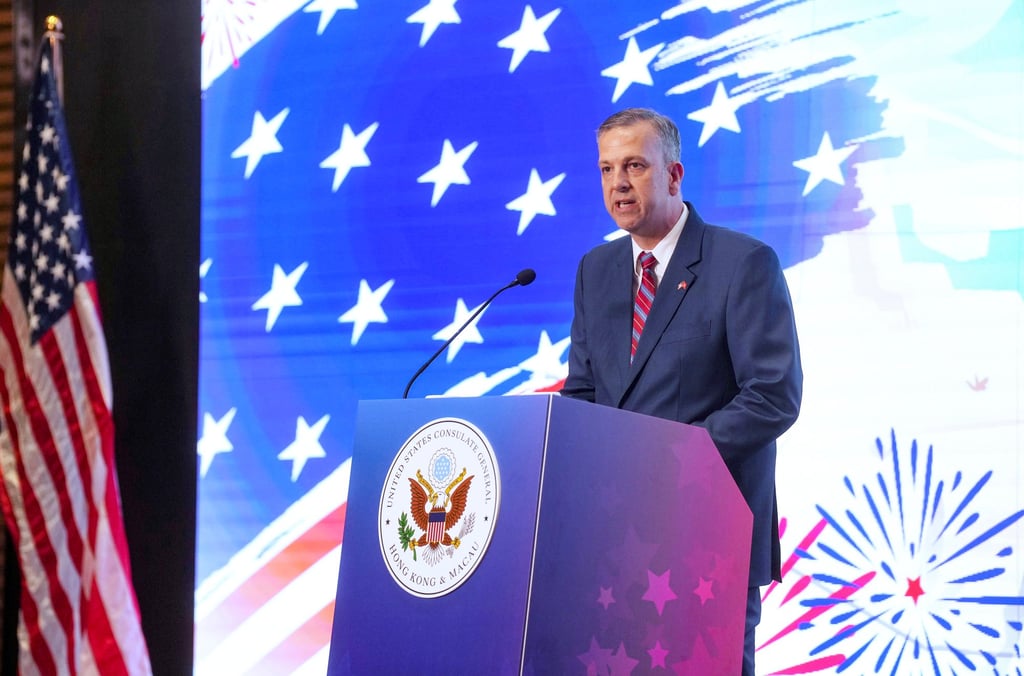
In response, a government spokesman said: “The suggestion that certain individuals or organisations should be immune from legal consequences for their illegal acts, including those involving collusion with foreign or external forces, is no different from advocating a special pass to break the law, and this totally runs contrary to the spirit of the rule of law.”
He added: “It is extremely inappropriate for the US consul general to make unwarranted comments on criminal trials which are ongoing in [Hong Kong] courts, and even attempt to compare [Lai’s] case with the efforts of the government in promoting the city.”
Lai, the 76-year-old founder of the now-defunct Apple Daily tabloid newspaper, is on trial for sedition and two national security charges. He is accused of drawing international sanctions against authorities and inciting public hatred during anti-government protests in 2019.
In his interview, May also said some American companies had to use burner phones and laptops when visiting the city because of connectivity issues and data security concerns, adding it was “a slippery slope” for Hong Kong to begin removing certain internet content and blocking access to websites.