Hong Kong leader’s powers to make subsidiary legislation in Article 23 law will help address risks swiftly, security minister says
- Secretary for Security Chris Tang says handing chief executive powers to make subsidiary legislation is long-standing practice in common law systems
- Move is part of efforts to prevent national security threats in timely manner, and powers also come with checks and balances, he says

Chris Tang Ping-keung, the security secretary, said on Sunday that handing such powers to the executive branch was a long-standing practice in common law systems and the process included checks and balances.
“By empowering the chief executive in council to make subsidiary legislation to set out the implementation details … the mechanism to safeguard national security can be implemented more effectively, and the national security risks can be prevented and addressed [in a timely manner],” Tang said.
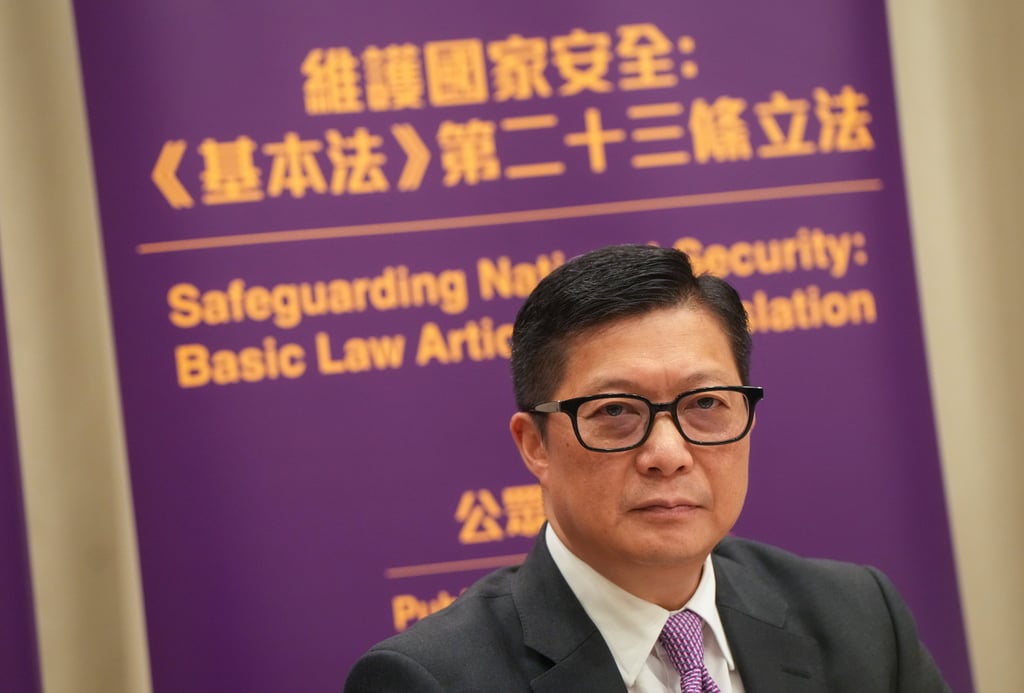
The clause was one of the more than 40 amendments introduced by the government last week, after lawmakers held nearly 50 hours of marathon meetings to scrutinise the bill since it was gazetted on March 8. The bill is expected to enter the final stage of deliberation and be passed at the Legislative Council as early as this week.
The amendment gives the chief executive in council – the city leader acting after consulting the key decision-making Executive Council – to make subsidiary legislation “for the needs of” safeguarding national security.
Tang said on Friday that the subsidiary legislation would be subject to the scope of the main ordinance and denied that the city leader could introduce new restrictions and offences “randomly”.
He added in his latest statement that the delegation of these powers was an established practice for common law jurisdictions such as the United States and the United Kingdom.
Tang said that more than 20 items of subsidiary legislation had been drawn up in Hong Kong since the start of the year.