Small-house policy not discriminatory because not all Hongkongers are eligible in first place, government argues in judicial review hearing
- Not all Hongkongers enjoy the rights of New Territories’ indigenous inhabitants, senior counsel Benjamin Yu tells court

A contentious policy that allows male indigenous villagers to build a house and not pay a land fee is not discriminatory because not all Hong Kong residents are eligible for such rights in the first place, the High Court heard on Tuesday.
Government lawyers put forward counter-arguments on the second day of a judicial challenge to the “small-house policy”, initiated by former civil servant Kwok Cheuk-kin and social worker Hendrick Lui Chi-hang.
The policy, enacted in 1972 under British colonial rule as a temporary housing measure, allows male, adult indigenous villagers to build a three-storey house within a recognised New Territories village or agricultural land without having to pay a land-use conversion fee. Such a fee would be hefty under today’s high property values.
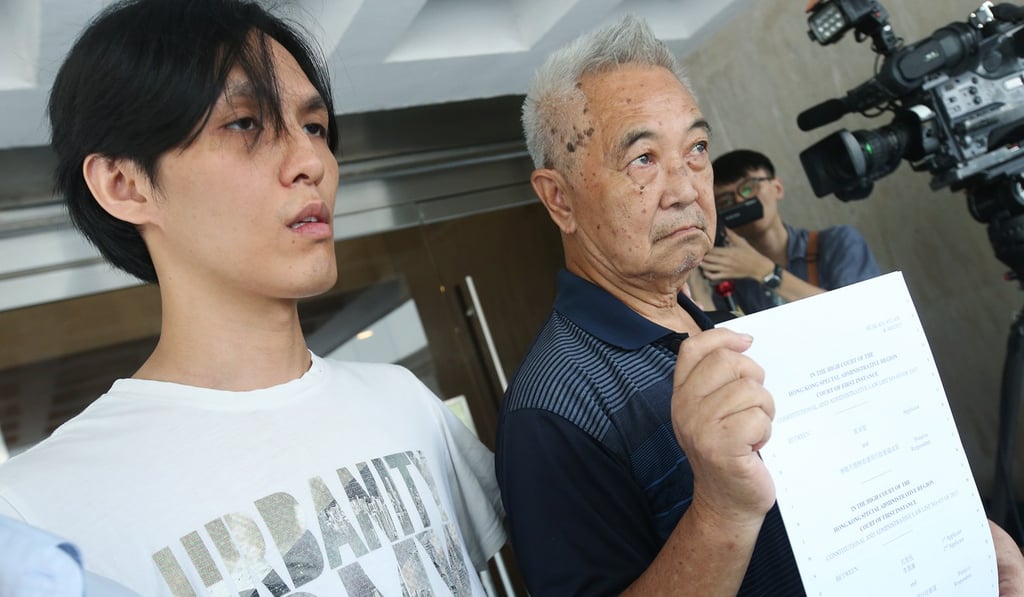
Kwok and Lui claim the policy is discriminatory as it is based on a person’s descent and sex and thus unlawful as it contravenes Article 25 of the Basic Law, which stipulates all residents shall be equal before the law. The Basic Law is Hong Kong’s mini-constitution.
They also refute claims the policy is a right covered by Basic Law Article 40, which states that the lawful traditional rights and interests of indigenous inhabitants must be protected.