Hong Kong developers, analysts warn against government pushing ahead with vacancy tax to solve city’s housing crisis
- Secretary for Transport and Housing Frank Chan Fan told lawmakers on Wednesday he “would not rule out the possibility of proposing a vacancy tax again”
- But analysts and developers’ representatives say the current economic situation is not a good time to revisit the policy

Hong Kong’s developers and analysts have warned it is not a good time for the government to revisit a shelved vacancy tax proposal for unsold homes, even as the idea received backing from lawmakers amid the city’s housing shortfall.
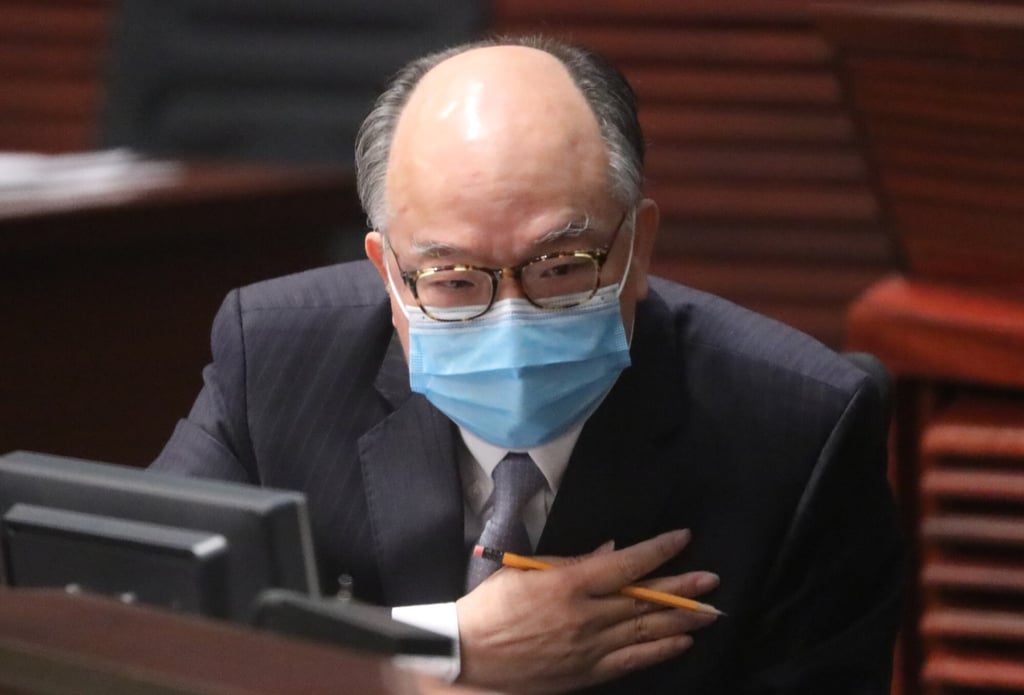
Secretary for Transport and Housing Frank Chan Fan told legislators on Wednesday he “would not rule out the possibility of proposing a vacancy tax again”, while the government is collecting more detailed data of unsold units and their sizes.
His remark was in response to lawmaker Leung Che-cheung, who expressed concern over the government’s withdrawal of the vacancy tax bill on flats last year. Leung asked whether authorities would consider reviving it.
“Young people have no hope of owning their homes. The government cannot replace the private market even when they can develop public housing, there should be room for private developers,” said Leung, of the Democratic Alliance for the Betterment and Progress of Hong Kong.
According to a Legislative Council report, there were around 12,300 completed but unsold private residential flats in Hong Kong as of the end of last year. This was an increase of 24.2 per cent from the figures in 2019, when 9,900 flats were left unsold.
Some 4,400 flats with a saleable area of less than 430 sq ft make up for 36 per cent of the total unsold properties. Those sized between 430 sq ft and 753 sq ft account for 23 per cent.
The vacancy tax, first announced by Chief Executive Carrie Lam Cheng Yuet-ngor in June 2018, is seen as a populist measure to punish developers who leave new flats empty for a long time amid soaring prices. The bill would cover first-hand homes that remained unsold for 12 months after an occupation permit was issued.