Hong Kong antiquities office studying authenticity of stone that could have marked boundary of city’s first urban settlement
- The Antiquities and Monuments Office says stone’s ‘City Boundary 1903’ inscription does bear resemblance to seven other marker stones of the City of Victoria
- Online group Historical Walk Hong Kong discovered the stone, a 1.36 metre-tall rectangular cuboid, on Thursday and hopes to get it listed as heritage object

The government antiquities office is studying what could be a 118-year-old boundary stone that once marked the limits of Hong Kong’s first urban settlement after it became a British colony, following the discovery by a group of heritage lovers.
The Antiquities and Monuments Office told the Post on Friday its staff had visited the site on Lung Fu Shan on The Peak after the discovery, and found that the inscription “City Boundary 1903” did bear resemblance to several other boundary stones of the City of Victoria in their records.
If confirmed, the stone will be the eighth of its kind to be discovered.
“The office is conducting an in-depth study on the discovery, which will be added to its list of government historic sites for better protection upon determining its historical value”, it said, and urged residents to come forward if they had further information.
The City of Victoria, encompassing Central, Sai Wan, Sheung Wan and Wan Chai, was Hong Kong’s first urban settlement after it became a British colony. In 1903, the government published in its gazette proclaiming the city’s boundary, and seven stones erected to mark its limits have since been discovered.
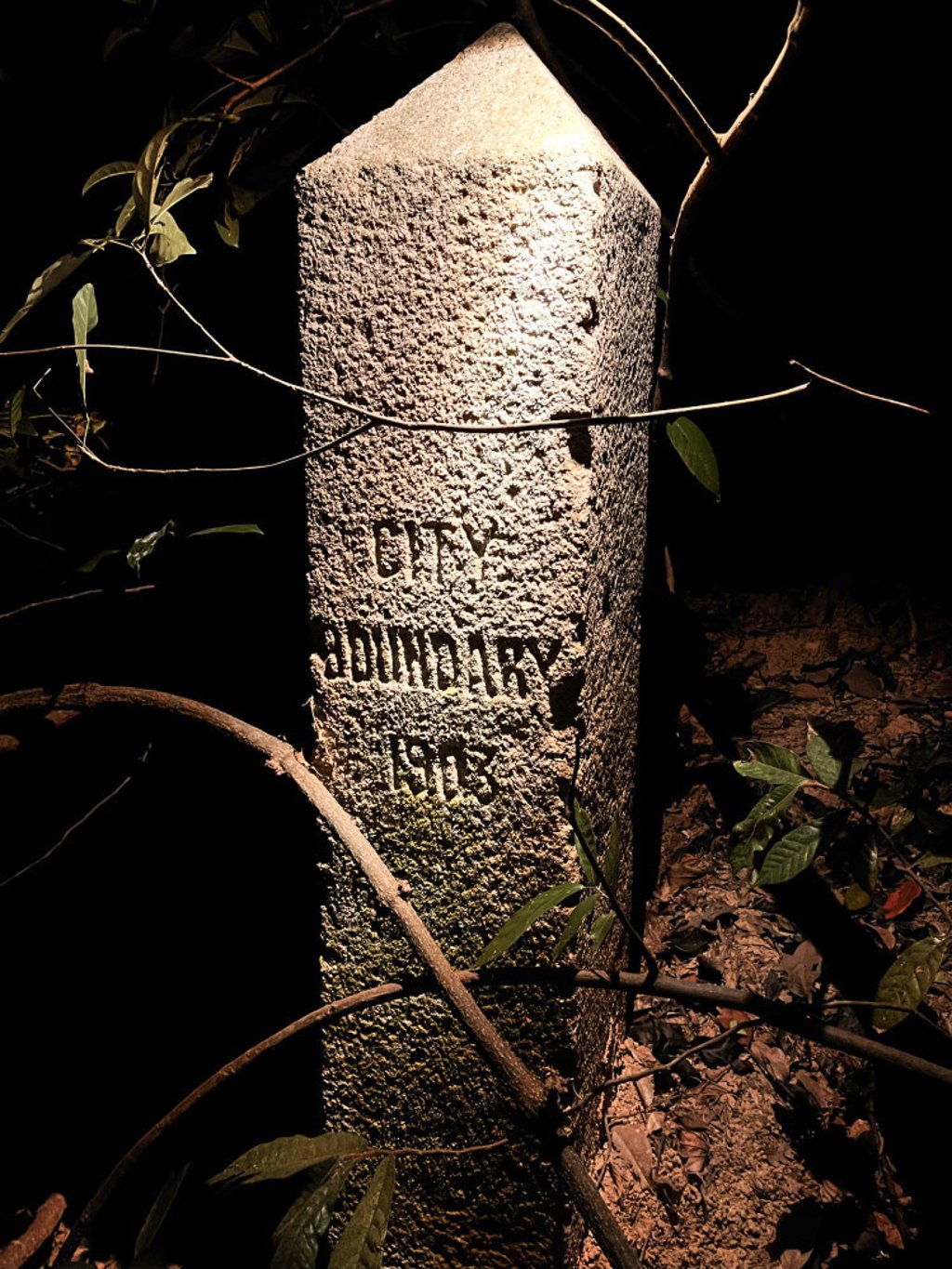
Online group Historical Walk Hong Kong on Thursday shared photos of what appeared to be the eighth stone in Lung Fu Shan, or the Hill Above Belcher’s.